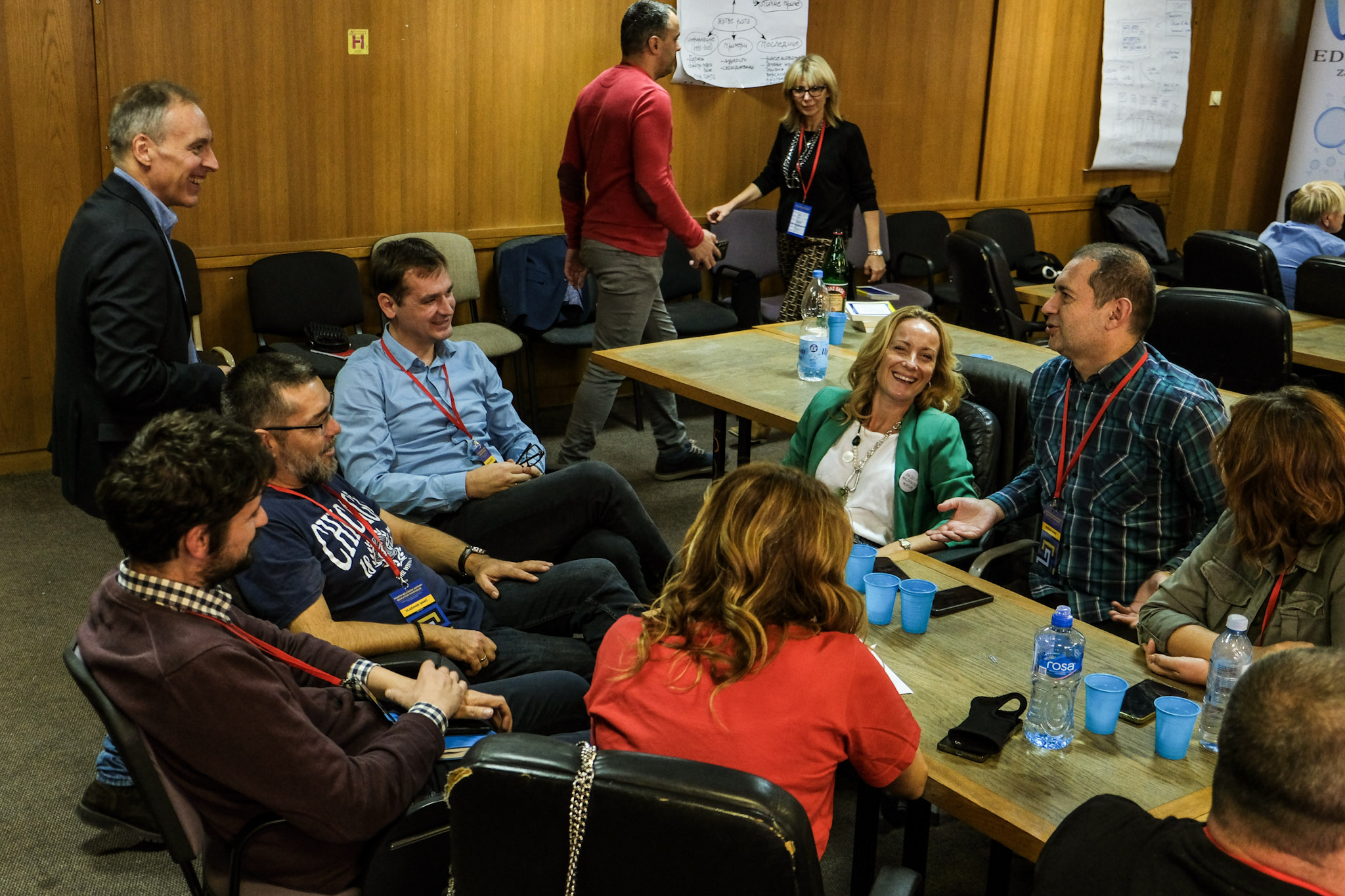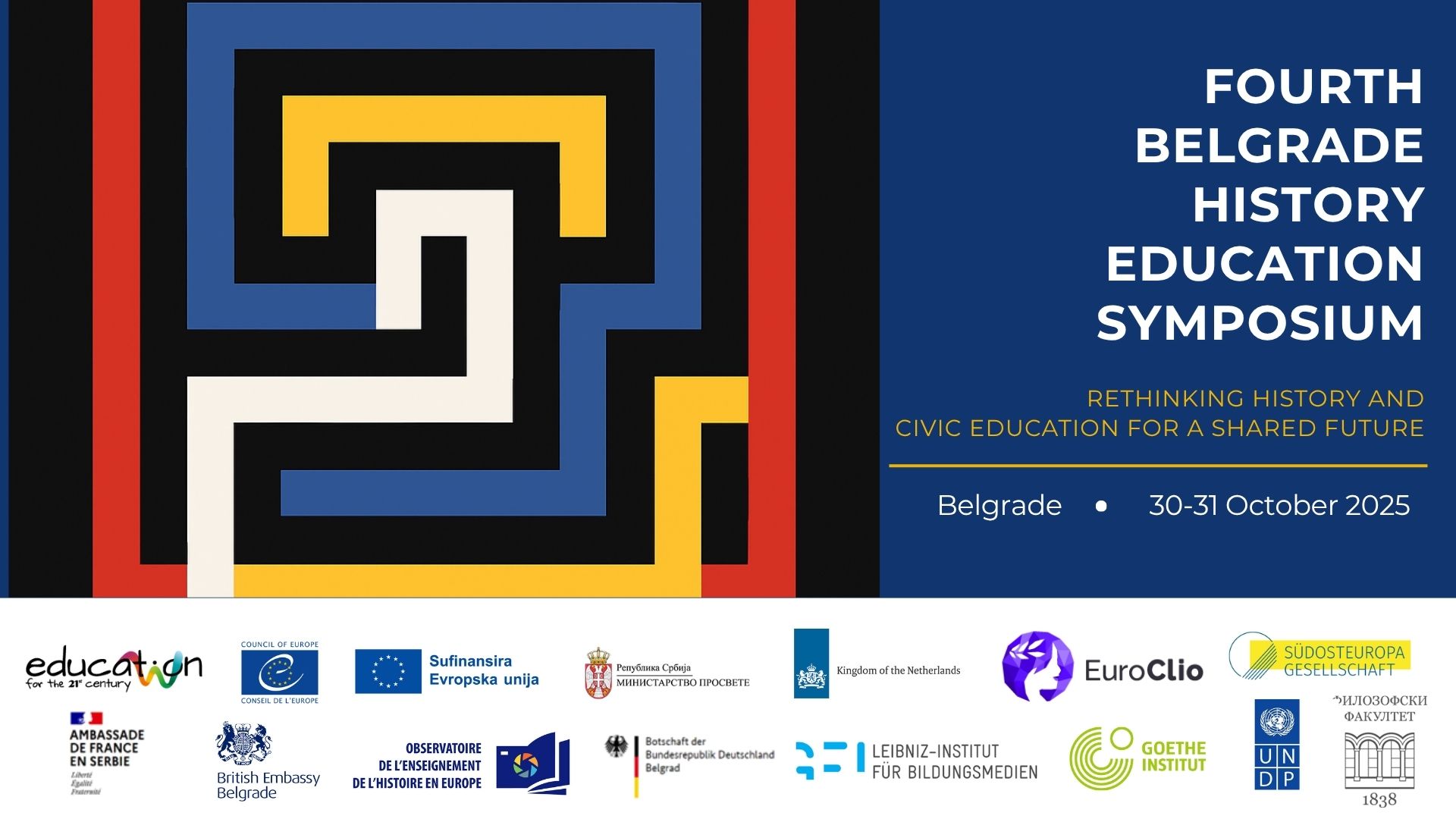
To mark the thirtieth anniversary of the Dayton Agreement, and in view of current social and political developments in the region, the Fourth Belgrade Symposium on History Education continues its mission to improve the quality of history teaching in ways that support democratic culture, intercultural understanding, diversity, and the exchange of innovative educational practices among researchers, teachers, and, above all, students as key agents of change. Today’s global and regional context, shaped by a rise in populism, nationalist rhetoric, disputed historical narratives, and the lasting effects of war trauma in schools, calls for a strong and coordinated response from both civil society and educational institutions.
At the same time, young people in the region show a growing willingness to take part in democratic life and to build more inclusive and peaceful societies. It is therefore essential to encourage them so that they can take an active role in shaping a future based on mutual understanding, critical thought, and sustainable peace.
The symposium serves as a platform for open and critical dialogue, bringing together experts, teachers, and students to reflect on how history education can contribute to a shared understanding of the past. Through panel discussions and interactive workshops, participants examine the state of history teaching thirty years after the Dayton Agreement. They explore which narratives dominate, whose voices remain unheard, and how students today perceive, interpret, and question the history they learn in school.
Civil society organizations that work with young people play an important role in developing innovative and inclusive approaches to history education. Through non-formal education and intercultural exchange, they create space in which young people can view historical narratives with a critical eye, challenge stereotypes, and encounter diverse perspectives. By linking historical learning with civic engagement and social responsibility, these organizations help form a new generation that approaches the past with critical awareness, empathy, and a commitment to peace and democracy.
The Fourth Belgrade Symposium on History Teaching took place on 30 and 31 October 2025. It opened at the French Institute with addresses by the ambassadors of the United Kingdom, Germany, the Netherlands, France and Switzerland, as well as by Janos Babity, Head of the Council of Europe Office in Belgrade.The Symposium brought together distinguished guests from Serbia and across Europe, while participants joined from Serbia and the wider WB region. As in previous years, the event was organized with the support of the Council of Europe Office in Belgrade and numerous partner organizations from Serbia and Europe.For the first time, in addition to traditional partners, the Ministry of Education of the Republic of Serbia also provided support.
The Embassy of the Republic of France, together with the French Institute in Belgrade, again took an active role as a partner in the organization of the Symposium. The new director of the French Institute, Amos Reichman, greeted the participants at the start and emphasized the importance of history education, noting that he is a historian by training.
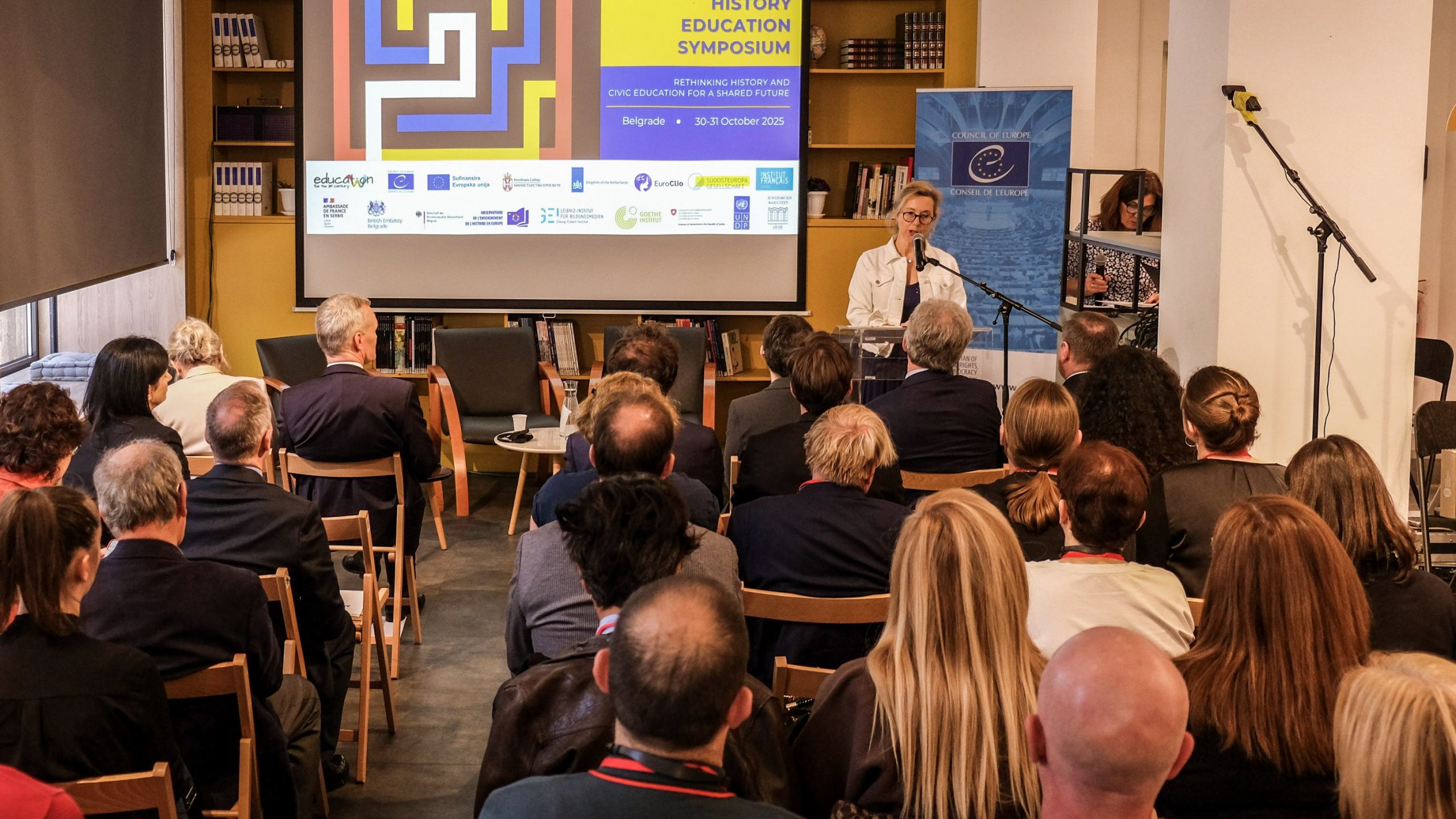
Her Excellency Florence Ferrari, the new Ambassador of France to Serbia, addressed the participants at the French Institute and noted that the French Embassy has supported this event since its launch in 2022.
Ambassador Ferrari expressed special gratitude to the organization Education for the Twenty First Century, fully dedicated to history education, as well as to the Council of Europe for its support, especially through the Observatory on History Teaching in Europe. She underlined the key role of these institutions in the advancement of high-quality history education and the strengthening of international cooperation.
She stressed that history is an essential tool for understanding the present and shaping the future, especially in a region where memory, politics and identity often intersect.
She also pointed out the European character of the Symposium and noted that a shared understanding of history not only reinforces connections across the continent but also equips young people to reflect with care on complex and at times disputed past events.
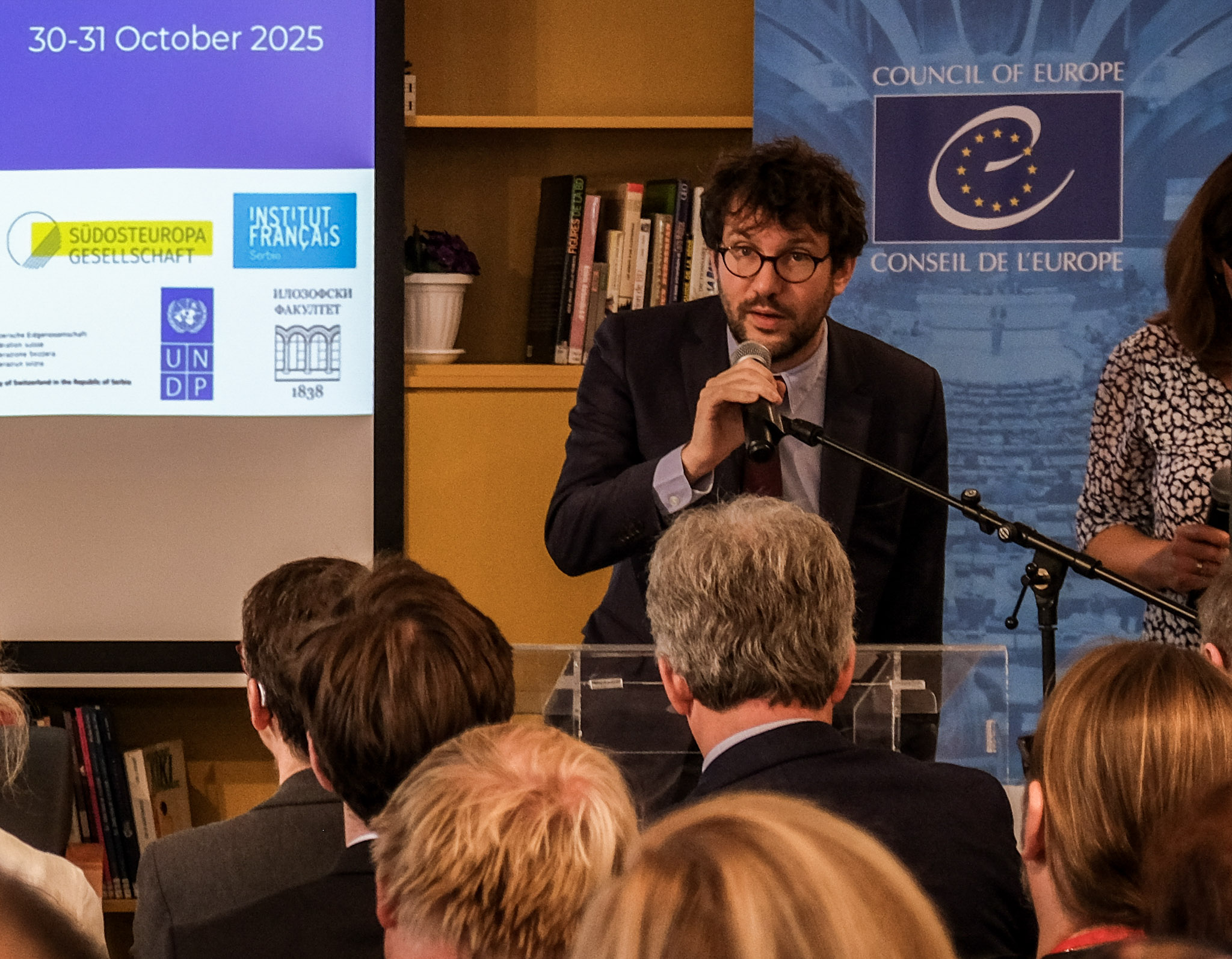
Amos REICHMAN, Director of the French Institute and Cultural Advisor
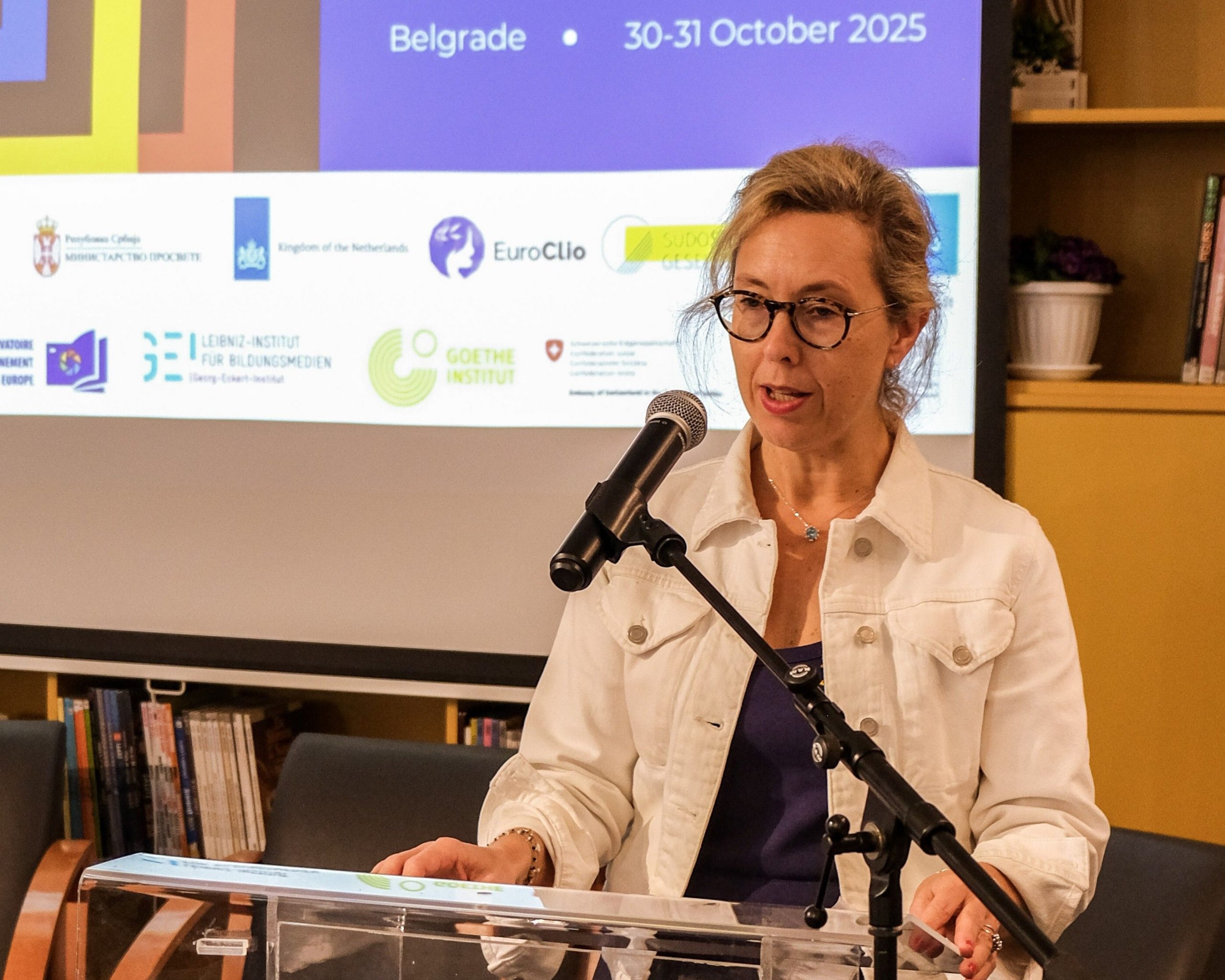
Florence FERRARI, French Ambassador to Serbia
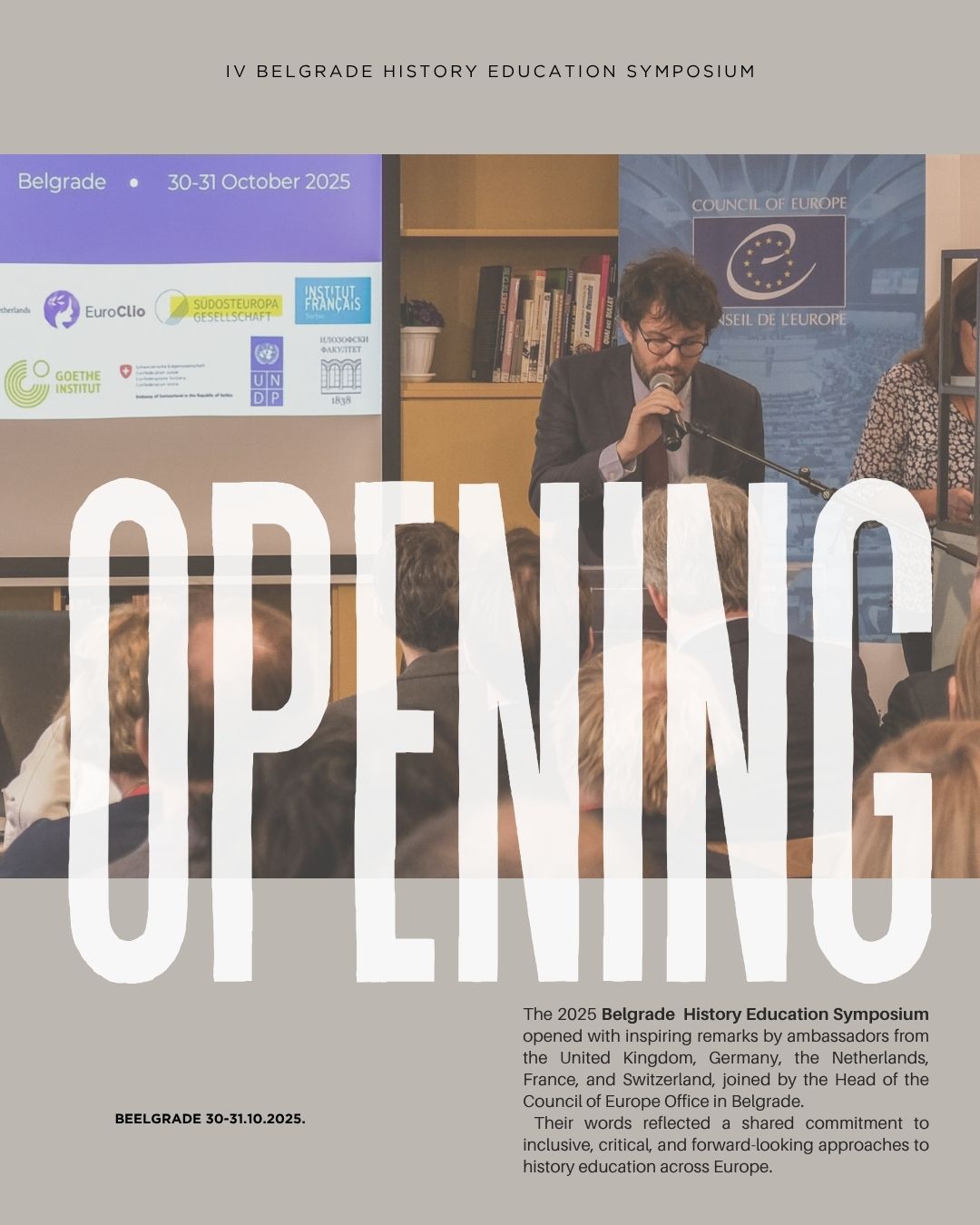
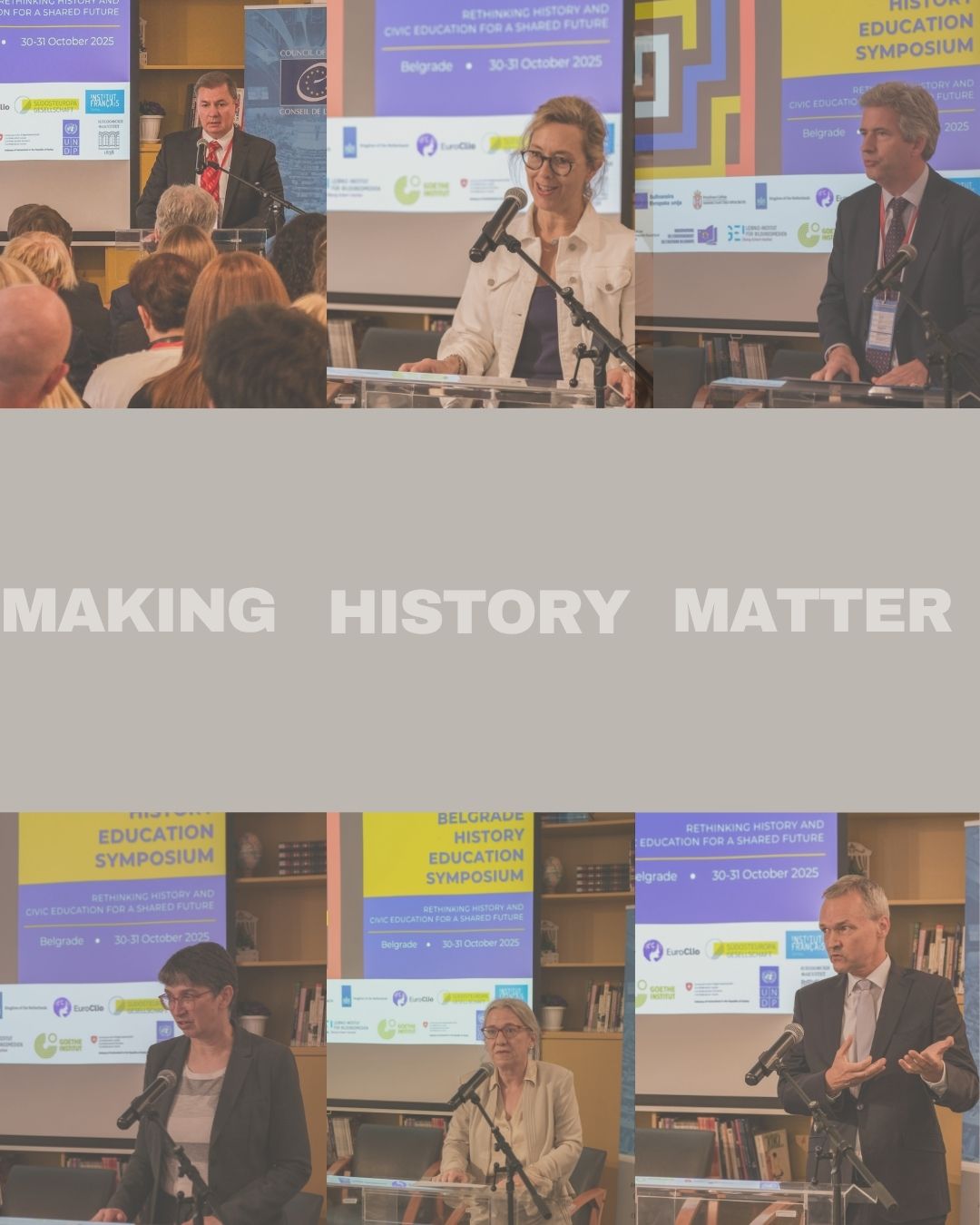
The Head of the Office of the Council of Europe, Janos Babity, welcomed the participants of the Fourth Symposium on History Teaching, noting that the organization of this year’s event had been made more difficult by various obstacles and a lack of funding. Nevertheless, he emphasized that all partners demonstrated exceptional perseverance, for which he expressed his sincere gratitude.
Speaking about the importance of history education, he underlined that it is not merely the transmission of facts, but also the understanding of different interpretations of historical events. He stressed that a one-sided interpretation of history can lead to new conflicts, which is one of the reasons behind the establishment of the Observatory for History Teaching within the CoE, of which Serbia is one of the founding members.
Babity also highlighted the role of modern digital and social platforms, which enable the dissemination of knowledge and democratic values, but at the same time carry the risk of misuse and the targeting of vulnerable groups. He conveyed the message that tolerance must prevail over divisions, and that the energy spent on conflicts takes away from the strength needed for unity and for building a democratic future.
He took the opportunity to emphasize the importance of the process of historical reconciliation, a topic that has also been discussed in previous years. He pointed out that the most significant example in Europe is the Franco-German reconciliation after the Second World War. He also shared a personal experience — the example of Serbian-Hungarian reconciliation, initiated in 2011 through dialogue that led to the abolition of outdated legal practices from 1943–1944, under which, after the war, two nations, the German and the Hungarian, had been declared war criminals.
Babiti noted that the government launched the reconciliation process by amending those decrees, taking into account the fact that Serbs and Hungarians have lived side by side as neighbors for centuries, that they wish to continue living together, and to carry that legacy into the future. He added that the process has been successful — travels across Vojvodina clearly show how much the situation has changed, positively affecting the lives of Hungarians and their place in contemporary society.
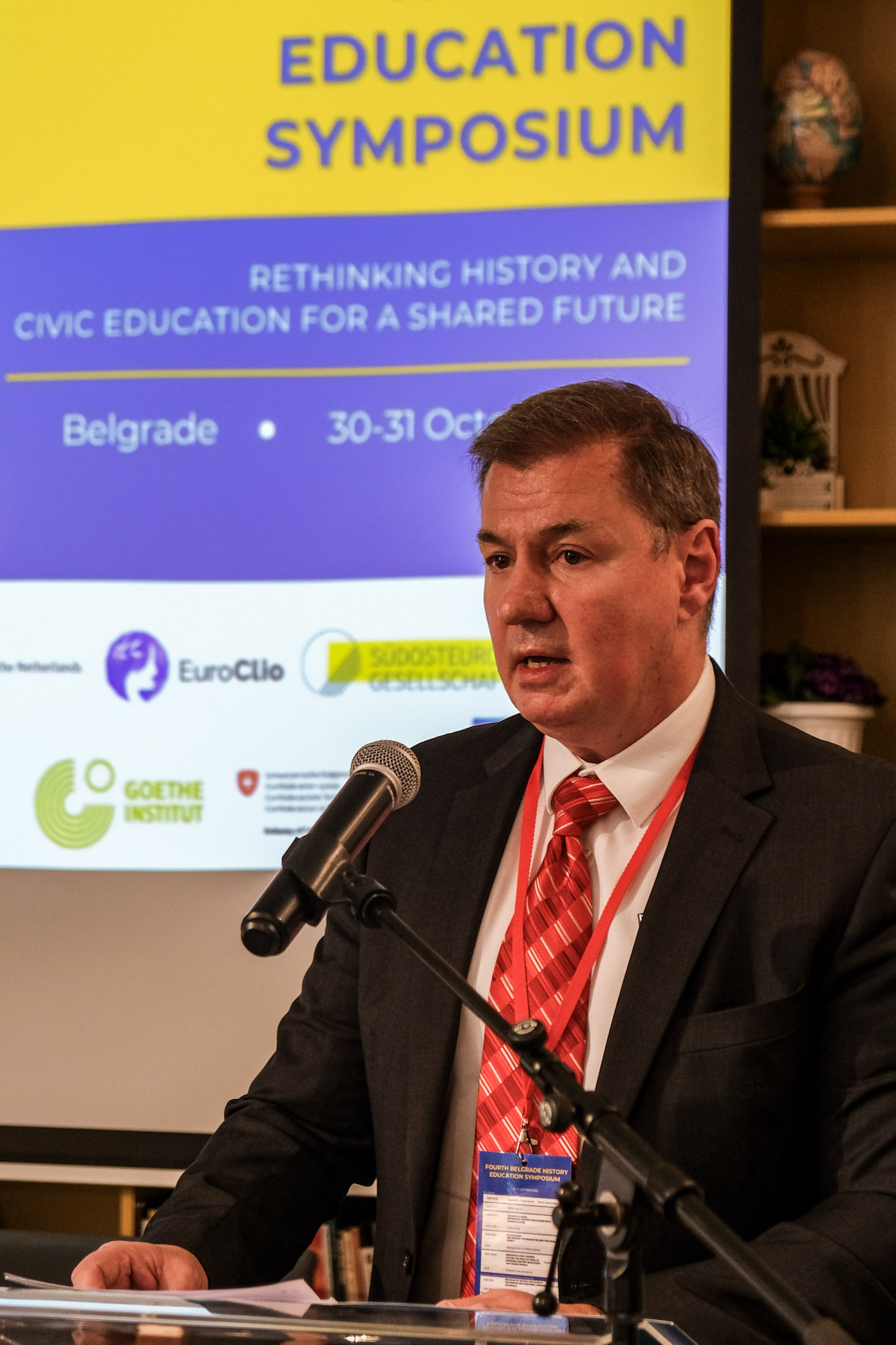
Janos BABITY, Head of the Council of Europe Office in Belgrade
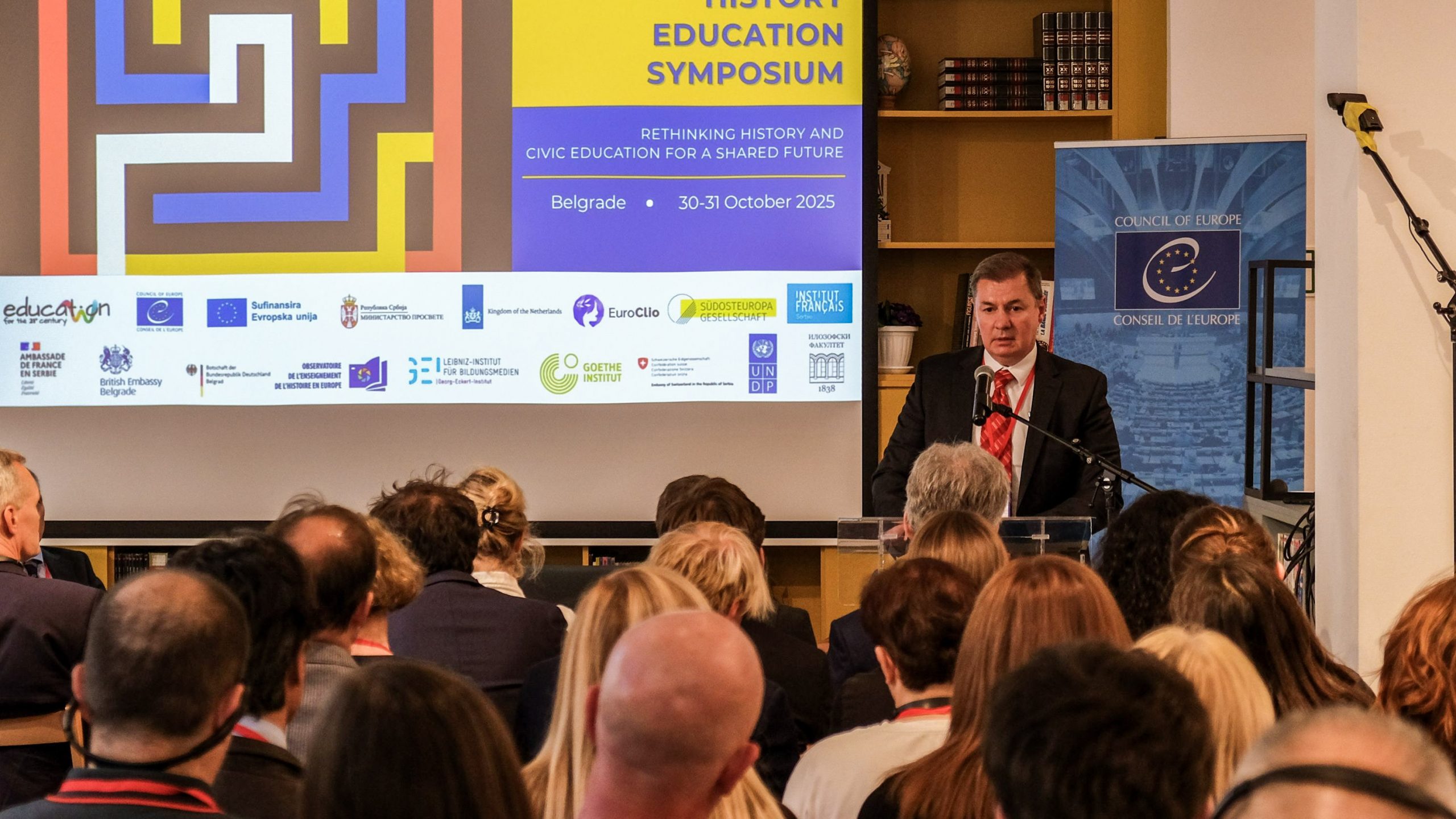
H.E. Edward Ferguson, the Ambassador of the United Kingdom to Serbia, underlined the weight and importance of history in the Western Balkans, noting the sensitivity surrounding the commemoration of historical traumas such as Jasenovac, Srebrenica, and Operation “Storm,” as well as peacebuilding milestones like the Dayton Peace Agreement. He stressed that, rather than remaining trapped in cycles of conflict, the region must find ways to break with the past in order to build a stable and prosperous future.
The Ambassador highlighted the declaration agreed at the 2025 meeting of Western Balkan foreign ministers in Belfast. The Hillsborough Castle Declaration recognizes that all communities in the region have suffered at different times during the conflicts of the last century, and affirms that historical trauma is not unique to any one ethnic group — a truth which, he emphasized, must be better understood by future generations so that the mistakes of the past are not repeated.
Drawing on personal experience, Ferguson spoke about his hometown in Northern Ireland — a small village that, during the Troubles, refused to give in to sectarianism and continued to educate Catholic and Protestant children together. This approach, he noted, fostered understanding and a shared vision for the future, illustrating how quality history education can cultivate critical thinking, empathy, and the ability to see events from multiple perspectives.
He welcomed the participation of one of Northern Ireland’s leading experts on history education, Alan McCully, expressing hope that his contribution — and that of others present — would challenge participants to explore new and innovative approaches to the teaching of history. As he concluded, the future of the region will be shaped in classrooms, through the stories young people hear and the questions they are encouraged to ask.

Edward FERGUSON, British Ambassador to Serbia
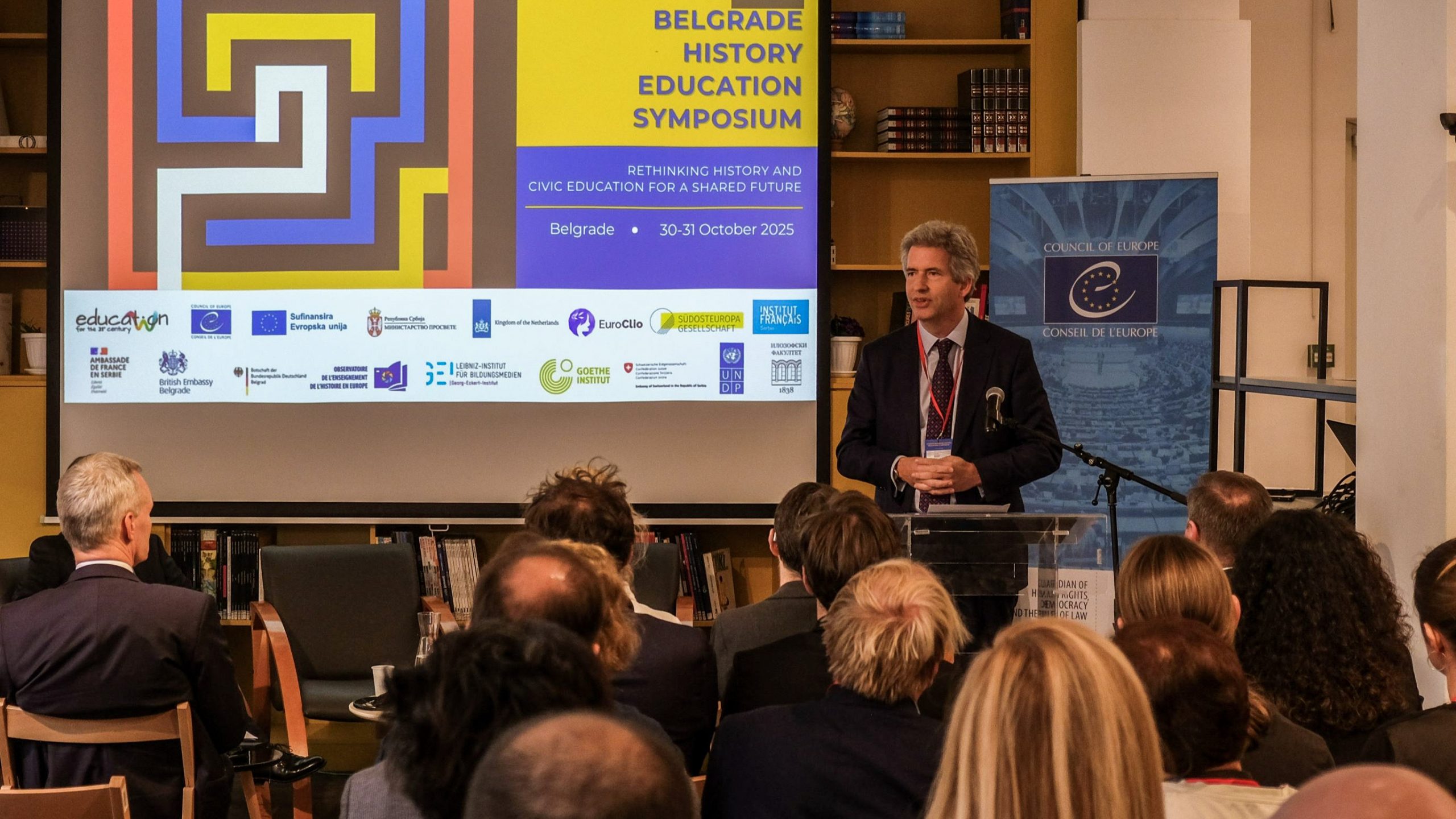
The Embassy of the Federal Republic of Germany, together with the Goethe-Institut, the Southeast Europe Association (Südosteuropagesellschaft), and the Georg Eckert Institute, took an active role in organizing the 2025 Symposium on History Education in Belgrade. German Ambassador H.E. Anke Konrad addressed the participants, emphasizing the central role of history education in building reconciliation, mutual understanding, and regional cooperation. Speaking to history teachers from Serbia and neighboring countries, she reflected on Germany’s own experiences in confronting the past — particularly the Franco-German and Polish-German reconciliation processes — as examples of how former adversaries can overcome deep-rooted hostilities through dialogue, education, and joint historical research.
The Ambassador also shared her personal experience of growing up in East Germany, where history education was ideologically shaped to portray East Germans as morally superior while shifting responsibility for Nazism onto the West. Only after the fall of the Berlin Wall did she realize how selective and politically motivated such a version of history had been — an insight that strengthened her belief that objective and critical history teaching is essential for the health of any democratic society. She further warned that ignorance and manipulation of history can perpetuate stereotypes and divisions, making dialogue and regional cooperation more difficult.
Ambassador Konrad stressed that teachers carry a demanding but crucial responsibility: helping young people understand not only what happened in the past, but also why it happened and what consequences it left behind. She concluded by thanking teachers for their dedication and expressing hope that the discussions and ideas shared in Belgrade would inspire classrooms across the region to cultivate critical thinking, openness, and reconciliation.
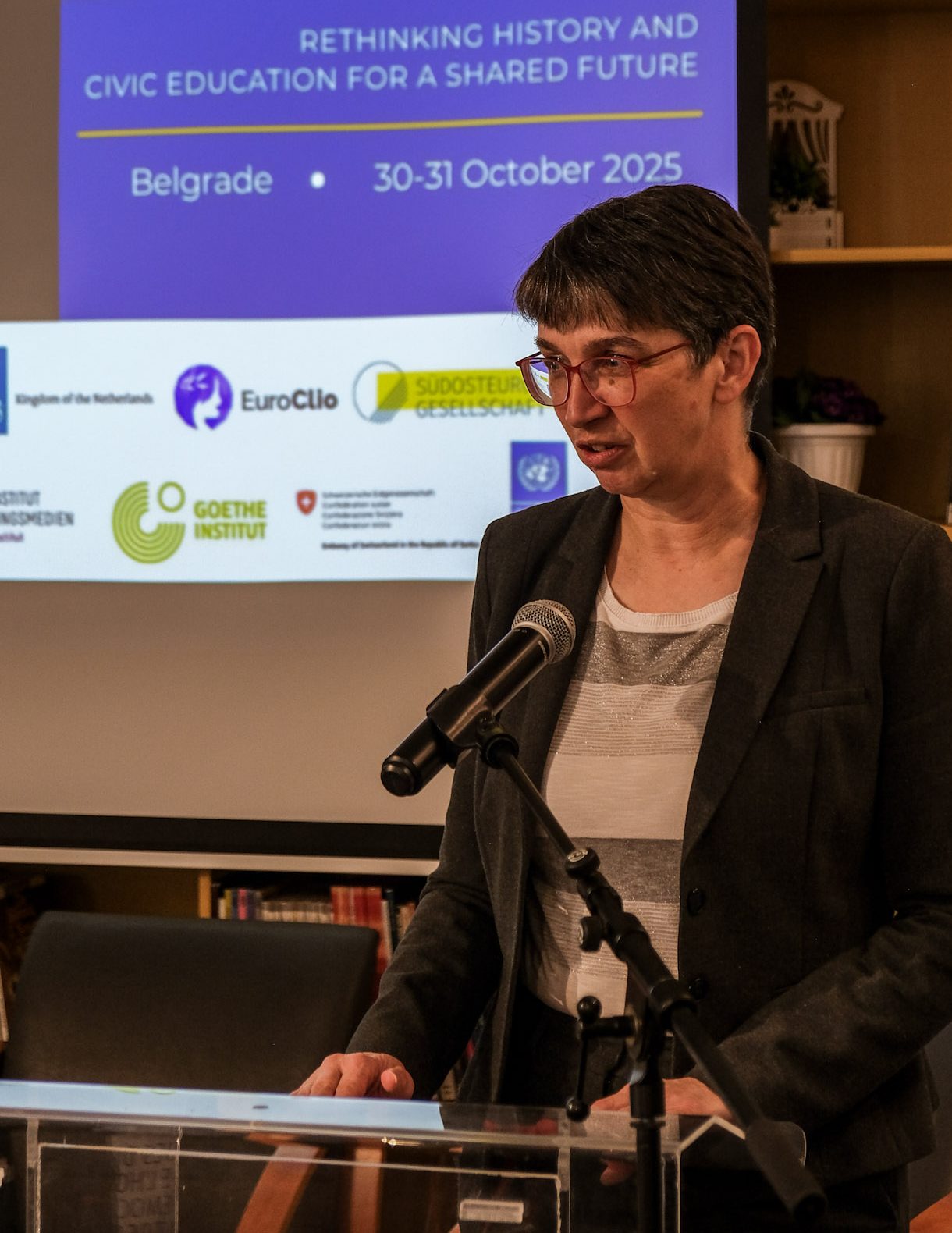
Anke KONRAD, German Ambassador to Serbia
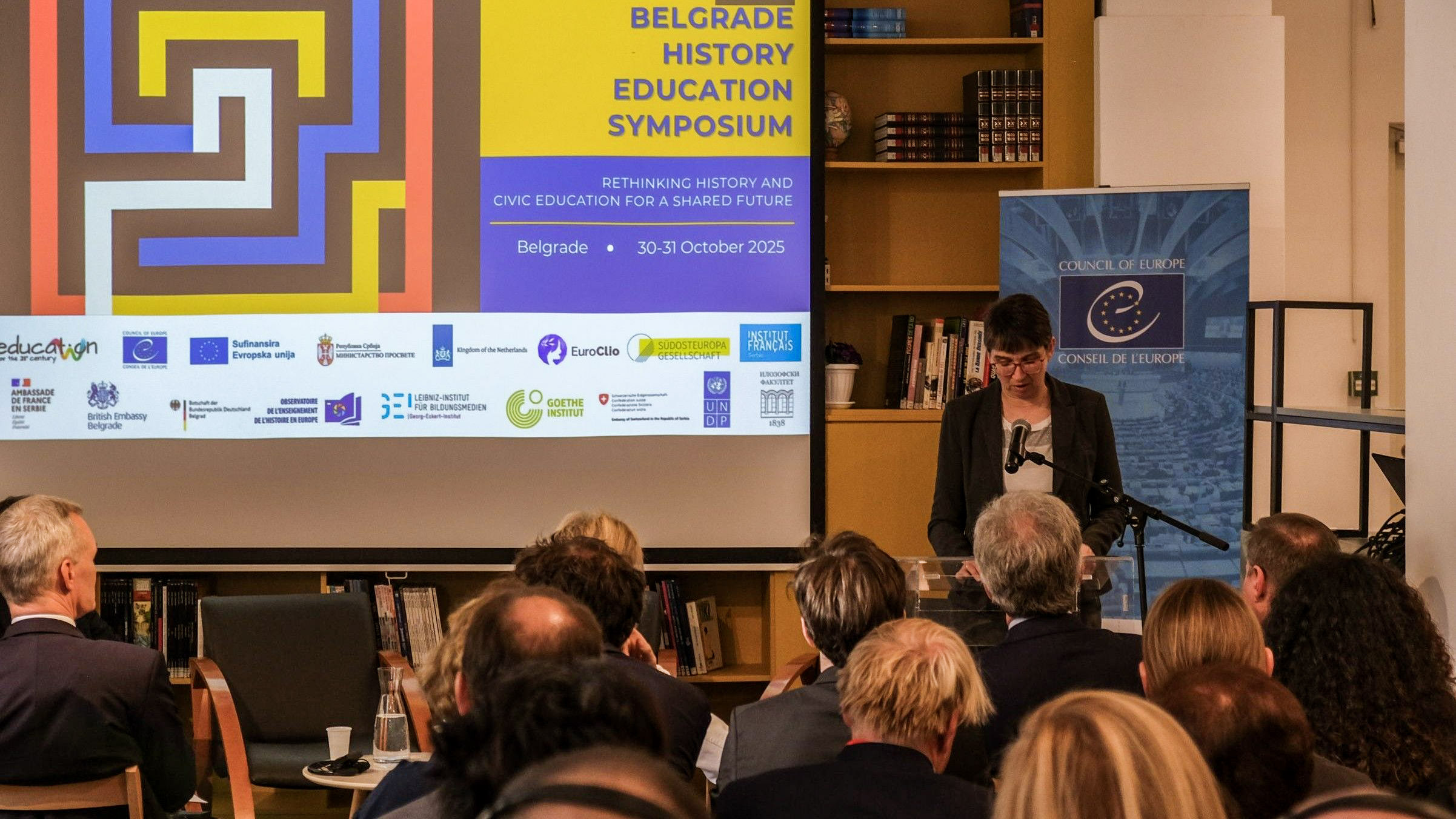
The Embassy of the Kingdom of the Netherlands played an active role in the 2025 Symposium on History Education in Belgrade, together with the organization EuroClio — the European Association of History Educators.
H.E. Martin Elgersma, Ambassador of the Netherlands to Serbia and Montenegro, highlighted the long-standing commitment of the Netherlands to promoting critical thinking and innovative approaches in history teaching, emphasizing the role of EuroClio — an international network of history teachers and educators — in fostering new models of history education across Europe. He noted that the work led by historians, researchers, and teachers reflects the Dutch government’s dedication to addressing difficult historical topics, ensuring transparency, and integrating these lessons into education and the public sphere.
Drawing on personal experience, Ambassador Elgersma shared the example of the Netherlands’ comprehensive research project on the decolonization of Indonesia, launched in 2017 and completed in 2022. Conducted in cooperation with Indonesian researchers, the project enabled a revision of official historical narratives decades after independence, acknowledging historical facts that had previously been overlooked.
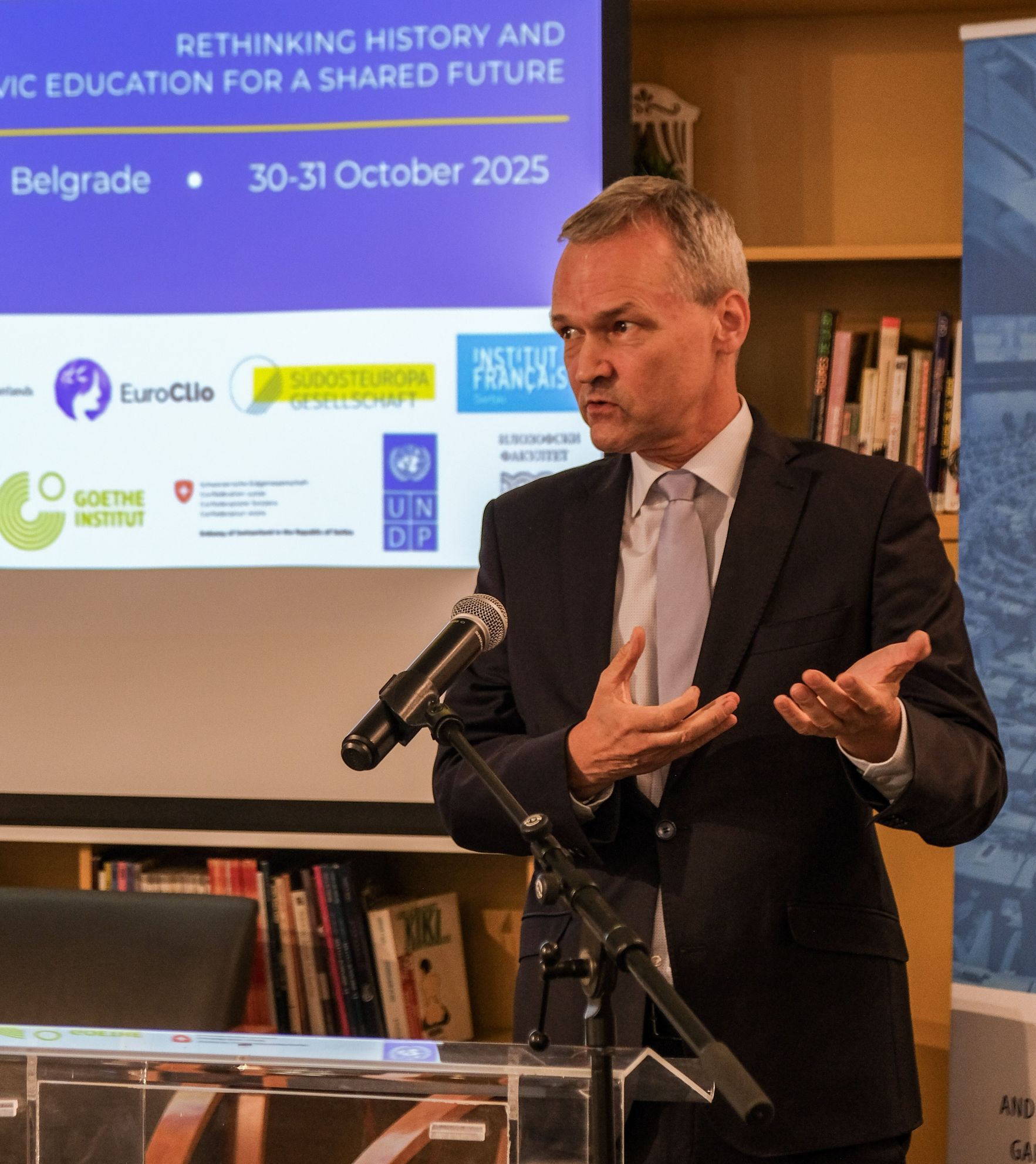
Martijn ELGERSMA, Ambassador of the Kingdom of the Netherlands to Serbia and Montenegro
H.E. Anne Lugon-Moulin, Ambassador of Switzerland to Serbia and Montenegro, thanked the organizers and highlighted Switzerland’s long-standing support for dialogue, inclusive education, and peaceful coexistence in the region. She emphasized the participation of a Swiss researcher whose work on teaching about the wars in the former Yugoslavia can be particularly relevant for the large Balkan diaspora in Switzerland, as well as for the wider public.
Ambassador Lugon-Moulin noted that the region often remains trapped in the past when it is not addressed openly and critically. From a personal perspective, she pointed out that Switzerland also had to confront its role during WWII, despite its neutrality, the country did both good and bad, and through major investigations in the 1990s and 2000s, particularly the commission on Nazi-era bank accounts and confiscated Jewish property, Switzerland was able to move forward and implement important financial reforms.
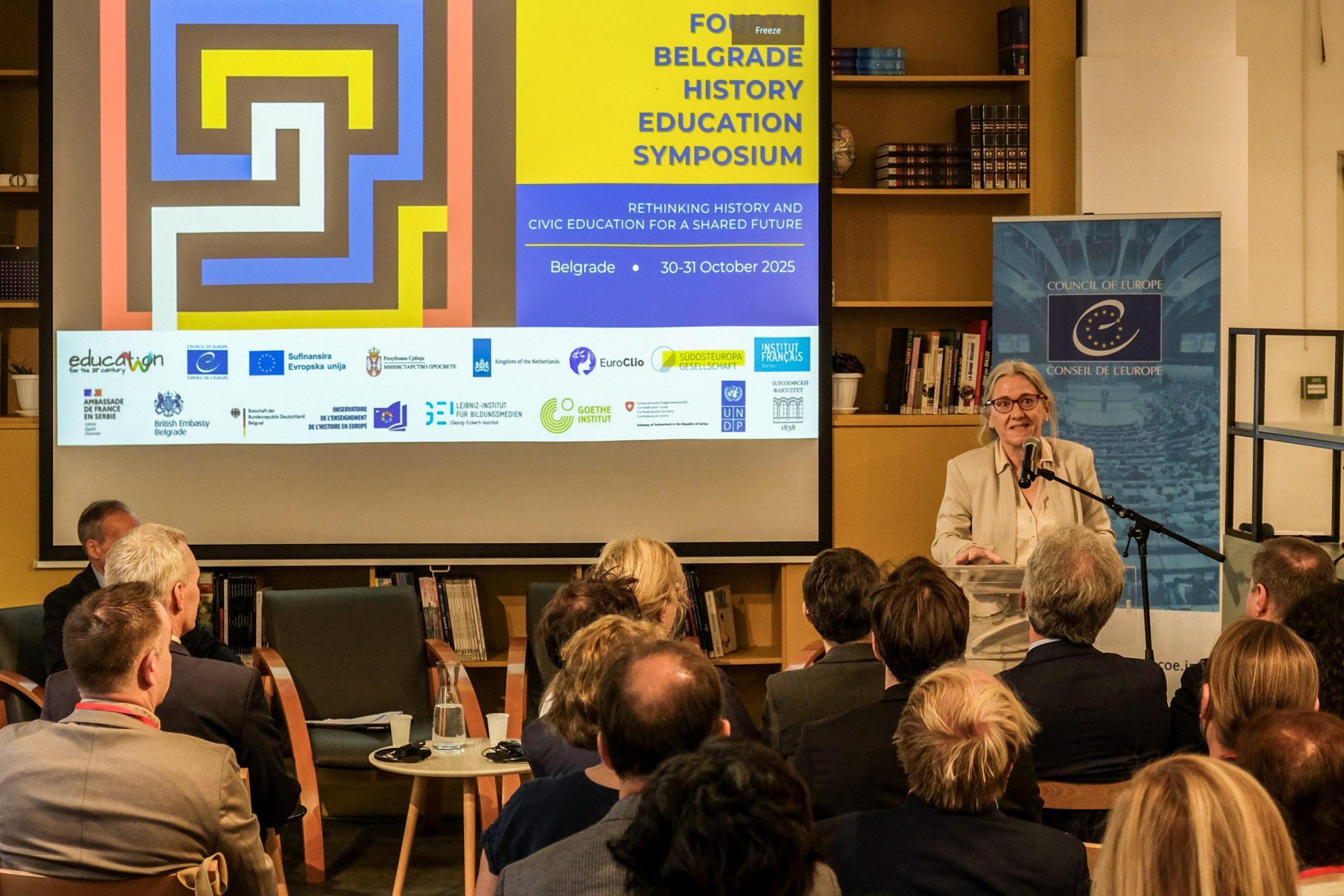
Anne LUGON-MOULIN, Ambassador of Switzerland to Serbia and Montenegro
At the opening, Professor Dr. Marko Šuica of the Faculty of Philosophy, University of Belgrade also addressed the audience, emphasizing that at a time marked by the rise of populism, nationalism, and authoritarianism, as well as the increasingly frequent political misuse of history, the role of teachers becomes crucial. It is their responsibility to encourage young people to think critically, to understand the complexity of the past, and to embrace diversity as a core value of contemporary society.
He issued a particular warning about new initiatives in Serbia which, under the pretext of cooperation in the field of history, actually exert pressure on how history is studied and taught. As an illustrative example, he cited the establishment of the Russian Historical Society in Serbia, whose initiators openly emphasize the political objectives and the “broader political significance” of the project—an approach that runs counter to the principles of academic independence and to the role of history in a democratic society.
In this context, he stressed that the Belgrade Symposium on History Teaching represents the best response to such developments, as it remains a space for the free exchange of ideas, open dialogue, and respect for differing opinions.
He also reflected on the year that has passed since the tragic events in Novi Sad, which triggered significant social change. Schools and universities have become spaces of struggle for critical thinking and the preservation of democratic values. Pupils and students continue to demonstrate courage and responsibility, while the task of the academic community is to support them in building a society free from prejudice and hate speech.
The Symposium is largely dedicated to the teachers and colleagues who continue to defend academic freedom and civic values through their work, as well as to the students whose courage reminds us that the true purpose of education is to build the foundations of a free and democratic society.
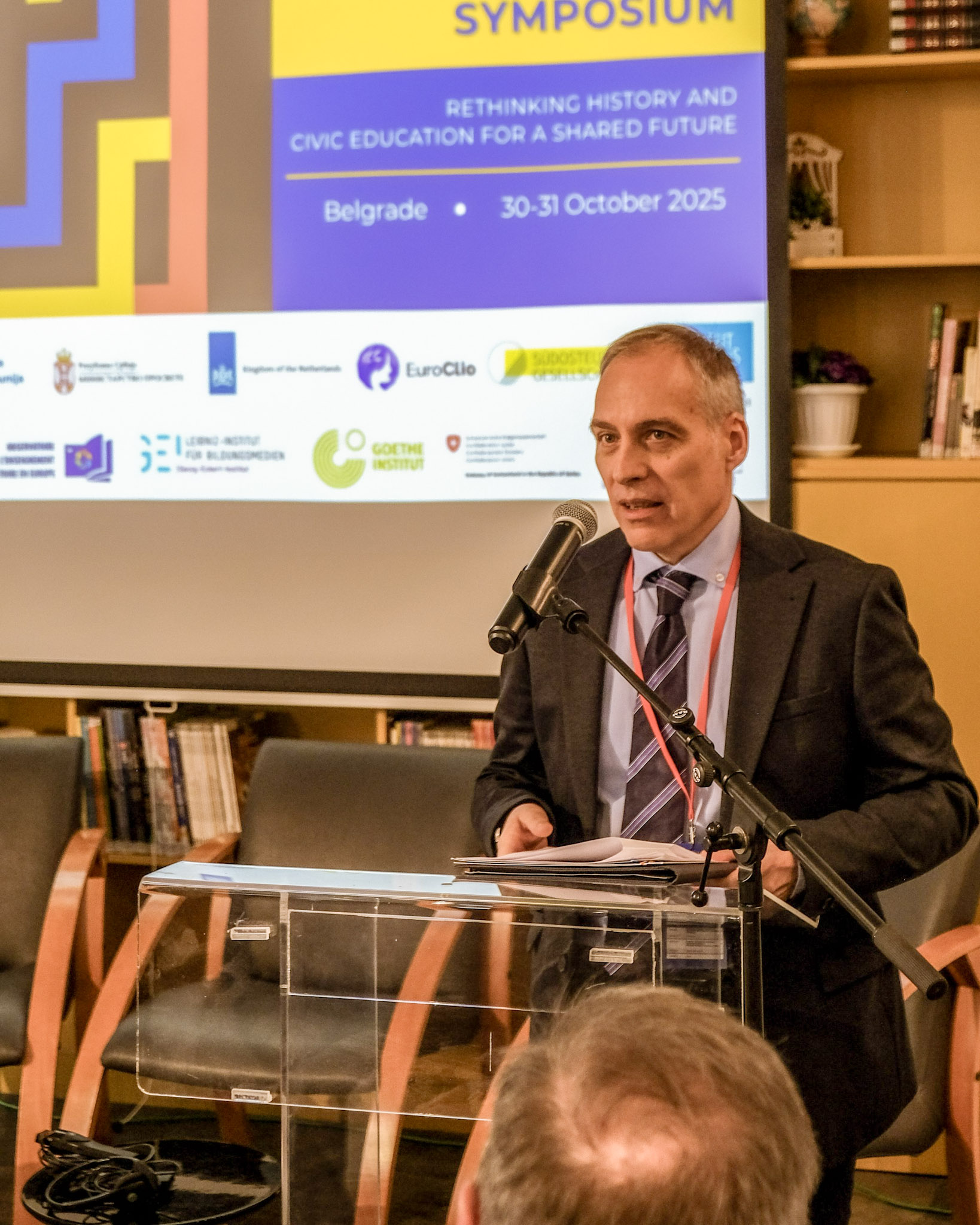
Marko ŠUICA, Professor, Faculty of Philosophy, University of Belgrade, Serbia
Četvrti beogradski simpozijum o nastavi istorije
First Panel: RETHINKING HISTORY EDUCATION FOR A SHARED FUTURE
How to develop democratic capacity of students in dealing with sensitive topics and traumatic experiences in history and civic education?
The first panel brought together experts who discussed the topic “Rethinking History Education for a Shared Future.” The panelists included Alan McCully (United Kingdom), Anne Madelain (France), and Julia Thyroff (Switzerland).
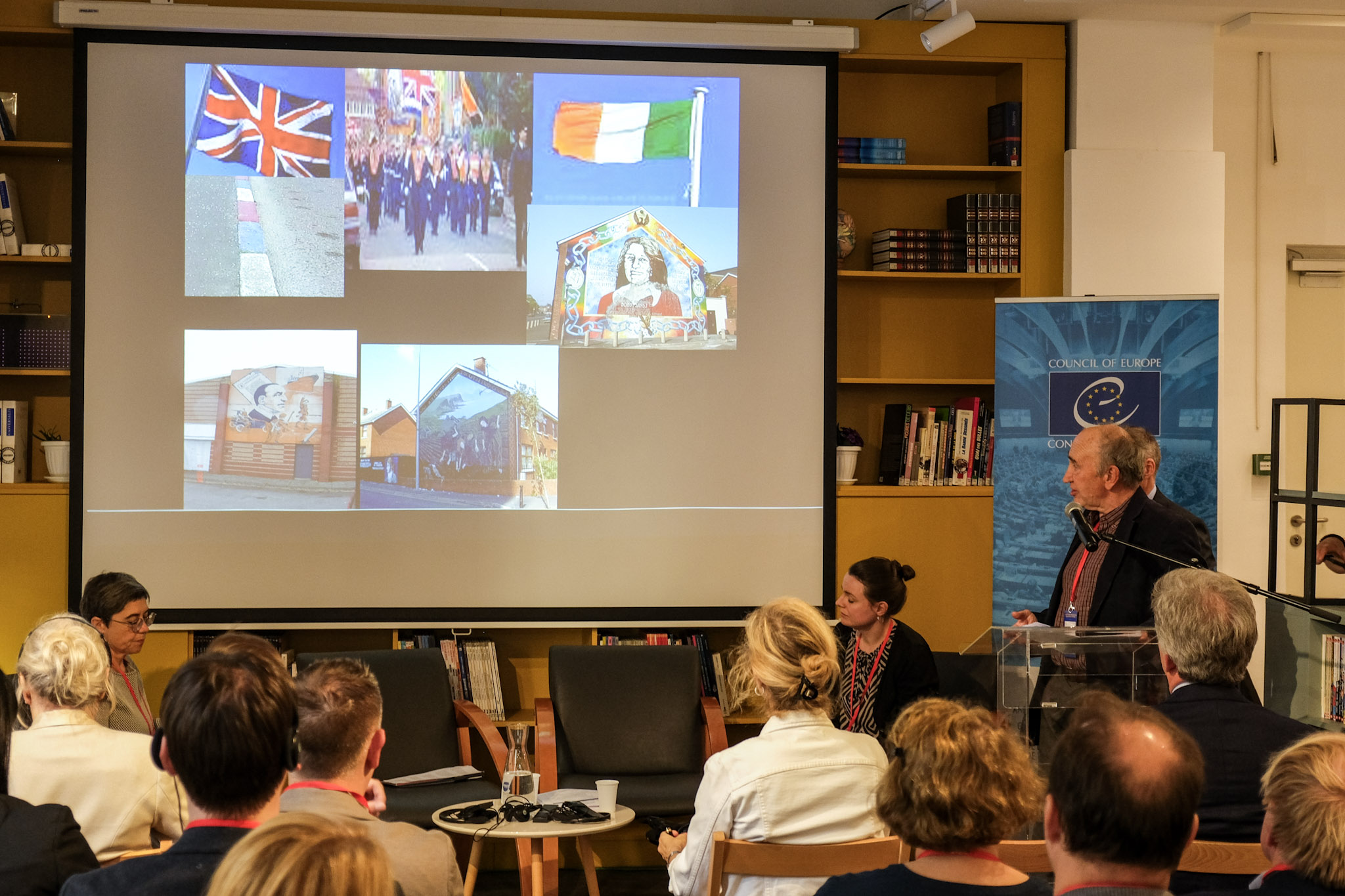
Alan McCully, former Senior Lecturer at Ulster University in the United Kingdom, spoke about learning history in a divided, post-conflict society, using the example of Northern Ireland. His presentation was designed as an interpretative educational model for teachers, focusing on the role of history teachers as agents of change within the broader social and educational context.
McCully explained the interconnection of various factors that shape the environment for history education in Northern Ireland. He pointed to the significant progress that has been made, as well as to the obstacles that still limit the role of history teachers in reconciliation processes. He particularly emphasized that history teaching must be evidence-based, interpretative, discursive, and socially relevant. He concluded his presentation with powerful classroom examples illustrating how students learn from the difficult and recent past of Northern Ireland.
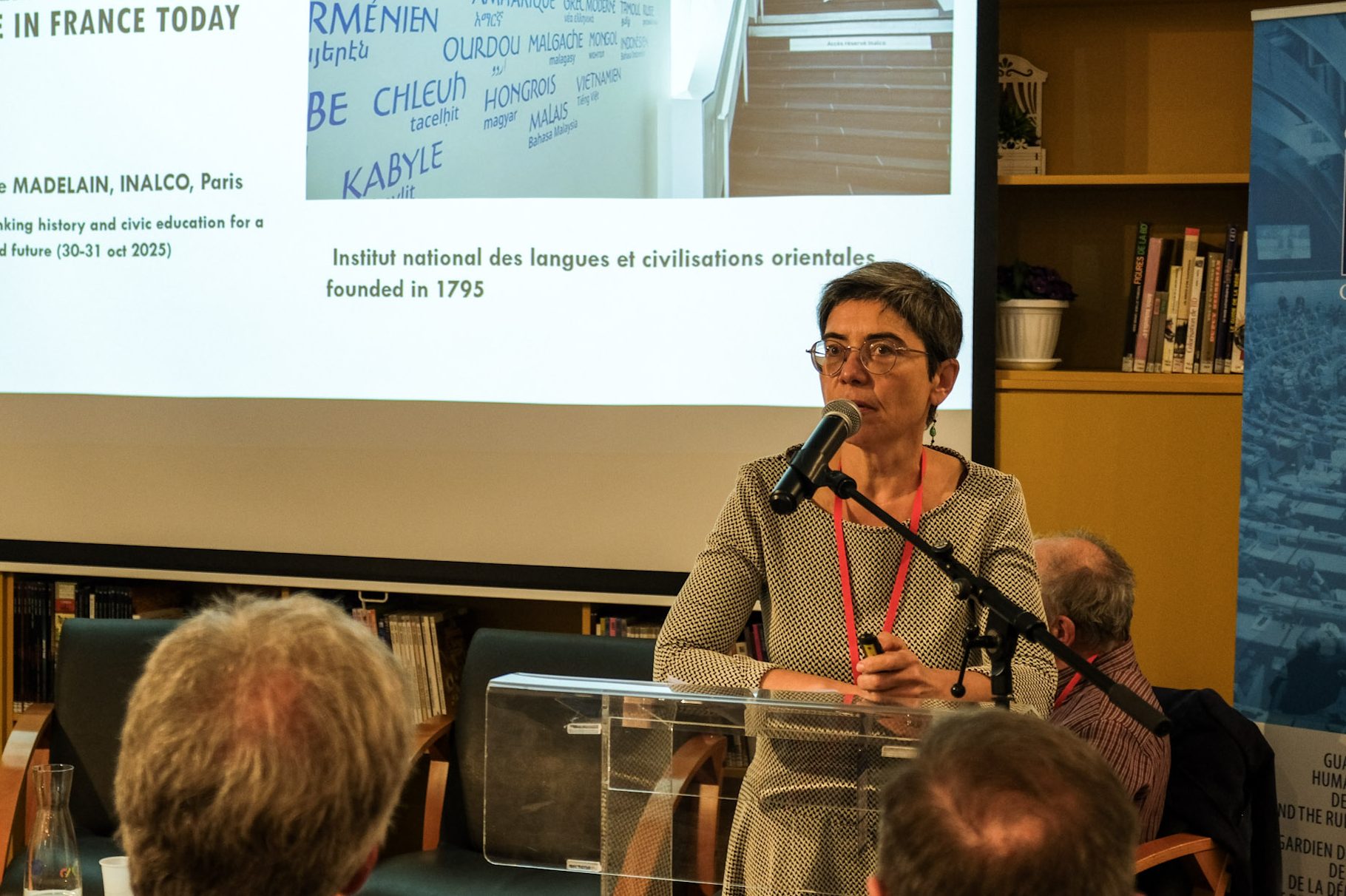
Anne Madelain, Associate Professor at INALCO in Paris, presented her paper entitled “Deconstructing National Narratives and the Importance of a Critical Approach in Teaching about the Balkans and Eastern Europe in France Today.”
Madelain stressed the importance of moving beyond exclusively nation-centered perspectives and advocated for a critical, reflective, and comparative approach that encourages students to question established narratives, consider multiple viewpoints, and understand the role of collective memory. Drawing on examples from French classrooms and history textbooks, she addressed the challenges of teaching sensitive topics, including the conflicts in the territory of the former Yugoslavia. She emphasized that history education can combine the acknowledgment of trauma with a critical approach, thereby fostering dialogue, tolerance, and the development of active, critically minded citizenship. Her presentation demonstrated how the deconstruction of national narratives contributes to the broader goal of the symposium—rethinking history education toward a shared, democratic future.
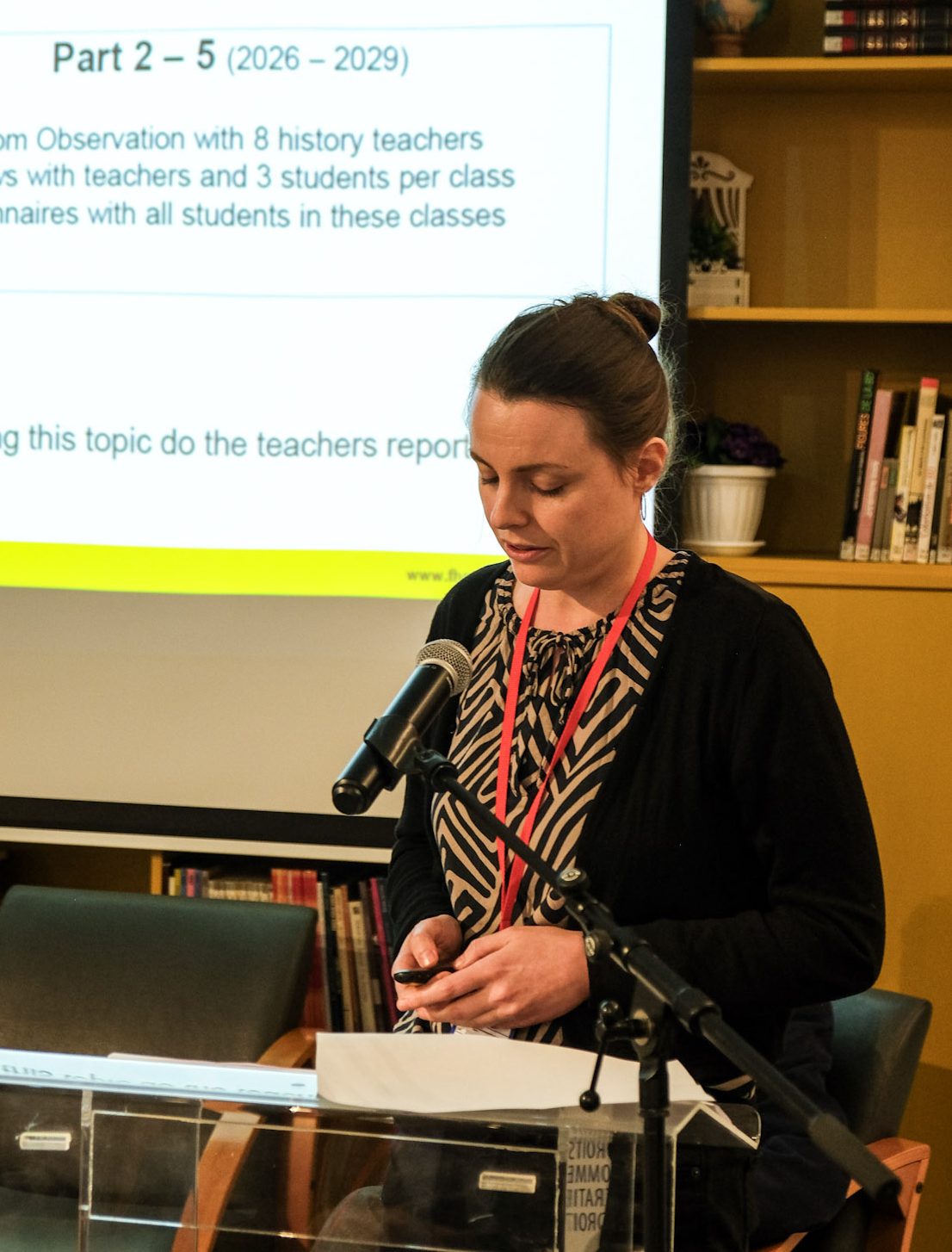
Dr. Julia Thyroff, a researcher at the Center for Civic Education and History Didactics at the University of Applied Sciences Northwestern Switzerland, presented the results of her empirical research Teachers’ approaches for addressing the Yugoslav wars of the 1990s in Swiss classrooms
conducted within a project on teaching the wars in the former Yugoslavia in the German-speaking part of Switzerland. She highlighted the importance of history education for young people and for the wider community, particularly in the context of the diaspora.
Second panel: ARE HISTORY TEXTBOOKS TELLING THE WHOLE STORY?
What Students Learn About War, Peace, and Post-Conflict Realities
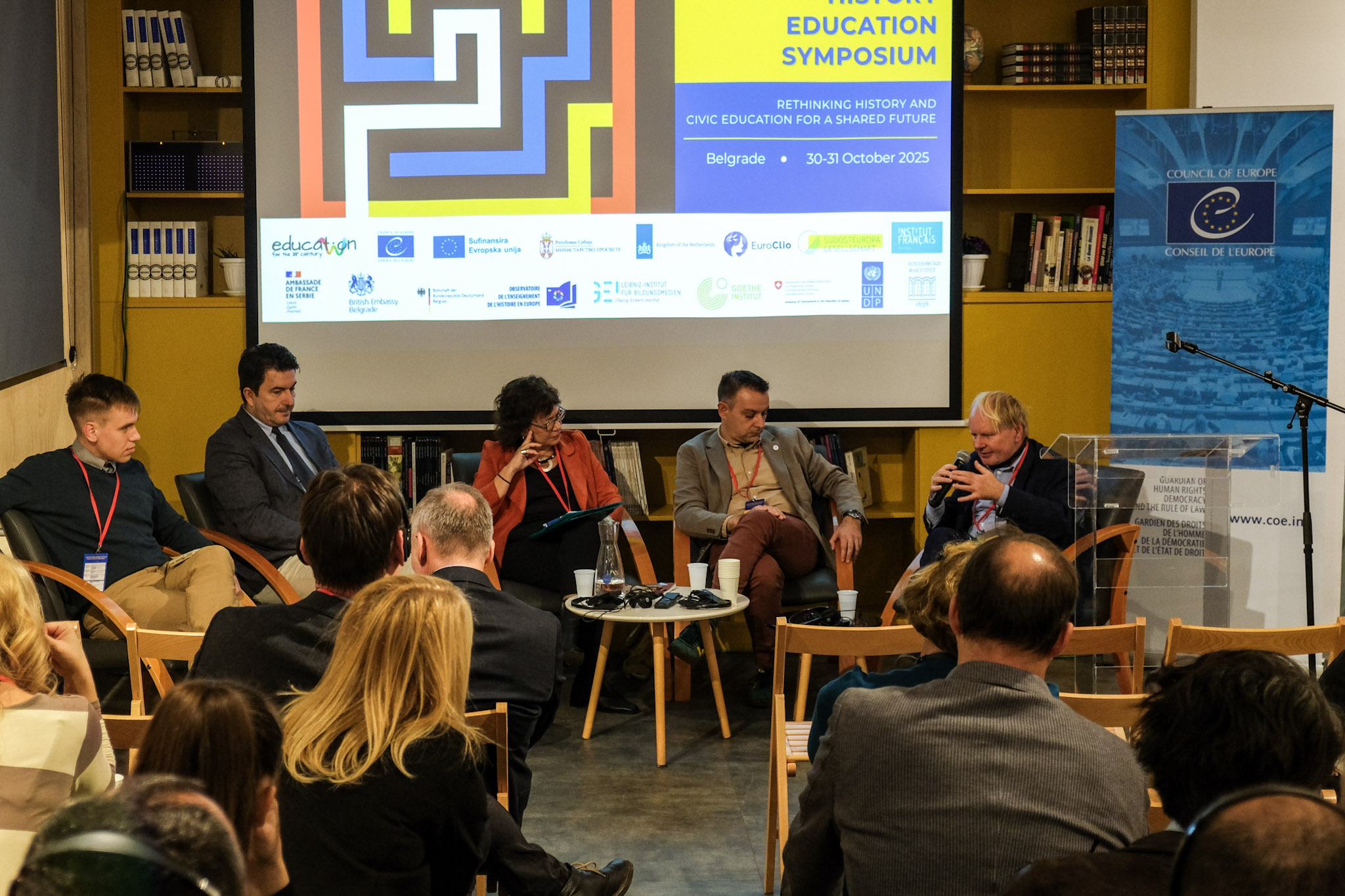
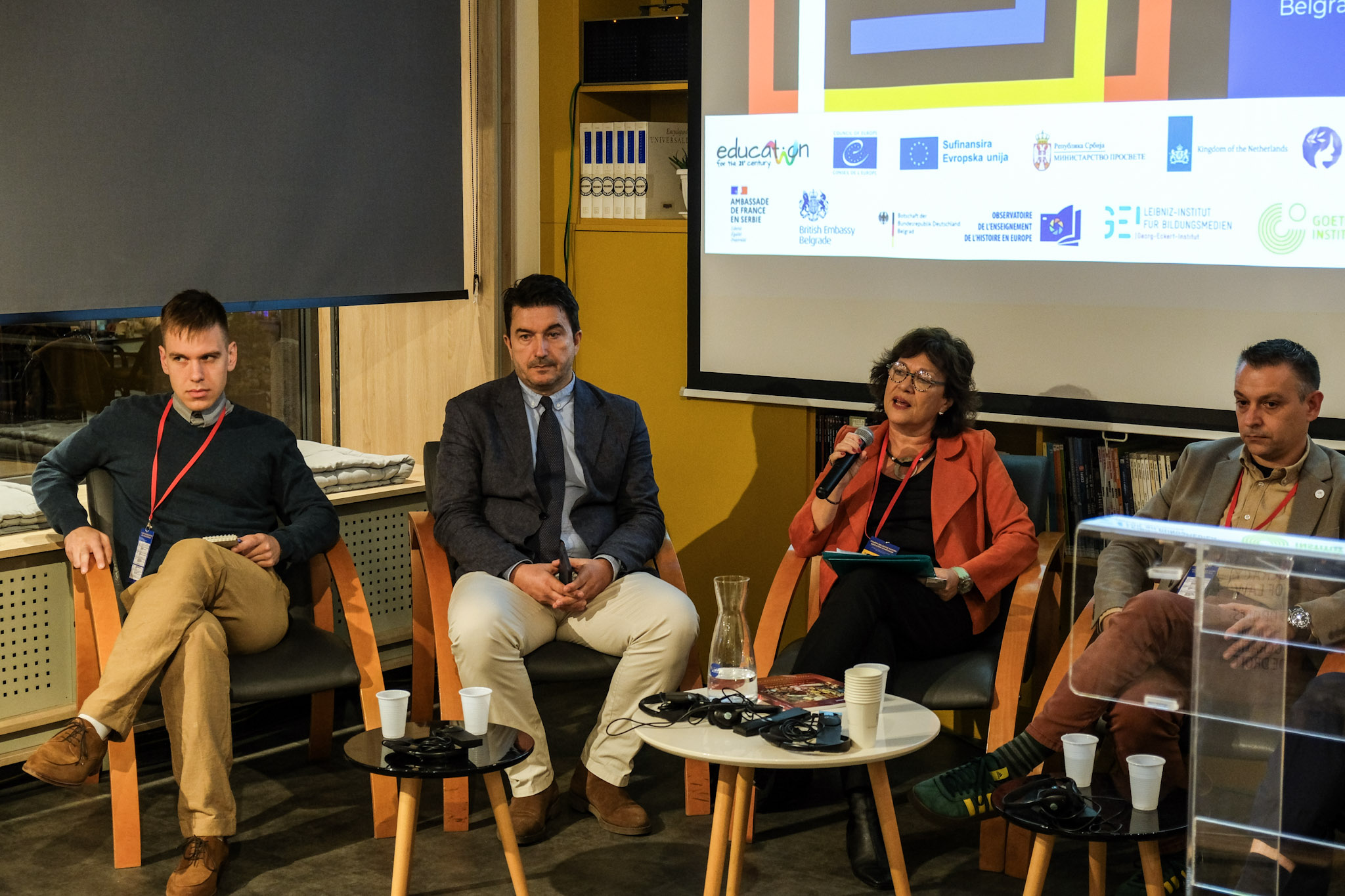
The second panel featured Prof. Dr. Dubravka Stojanović from the Faculty of Philosophy, University of Belgrade, Aleksandar Todosijević, history textbook author, Aleksandar Marinković, Coordinator Advisor in the Department for Social Sciences, Humanities, and Arts at the Institute for the Improvement of Education (ZUOV), and Dr. Steffen Samler, historian from the Georg Eckert Institute in Germany.
Prof. Stojanović referred to her many years of research on history textbooks in Serbia, challenging the frequently repeated claim that “history is written by the victors.” She pointed out that in Serbia, history is in fact constantly being rewritten, depending on political changes and prevailing narratives.
Aleksandar Marinković, Coordinator Advisor at ZUOV, explained the complex procedure for the approval of history textbooks. The process involves a committee composed of university professors, teachers, and researchers who thoroughly review all materials, provide recommendations, and only after all comments have been harmonized does the textbook receive official approval from ZUOV.
Aleksandar Todosijević, textbook author for Publishing House Klett and President of EuroClio Serbia, described his personal experience of writing a history textbook for the eighth grade of primary school. In this process, it was essential to align all topics proposed in the curriculum, the recommendations of IK Klett evaluators, and the comments of ZUOV reviewers, while also adapting the content to the students’ age in order to produce a high-quality teaching resource.
The participants also had the opportunity to hear insights from the Georg Eckert Institute, renowned for its textbooks that helped reconcile previously conflicting perspectives between Germany and France, as well as Germany and Poland, and for its research-based guidelines that influence teaching, the development of educational materials, and educational policy at both national and international levels. Dr. Steffen Samler from the Georg Eckert Institute in Braunschweig presented comparative insights based on international textbook research.

Public event :EDUCATION FOR A SHARED FUTURE
THE ROLE OF NGOs IN INFORMAL HISTORY EDUCATION FOR YOUNG PEOPLE
XXXXXXX
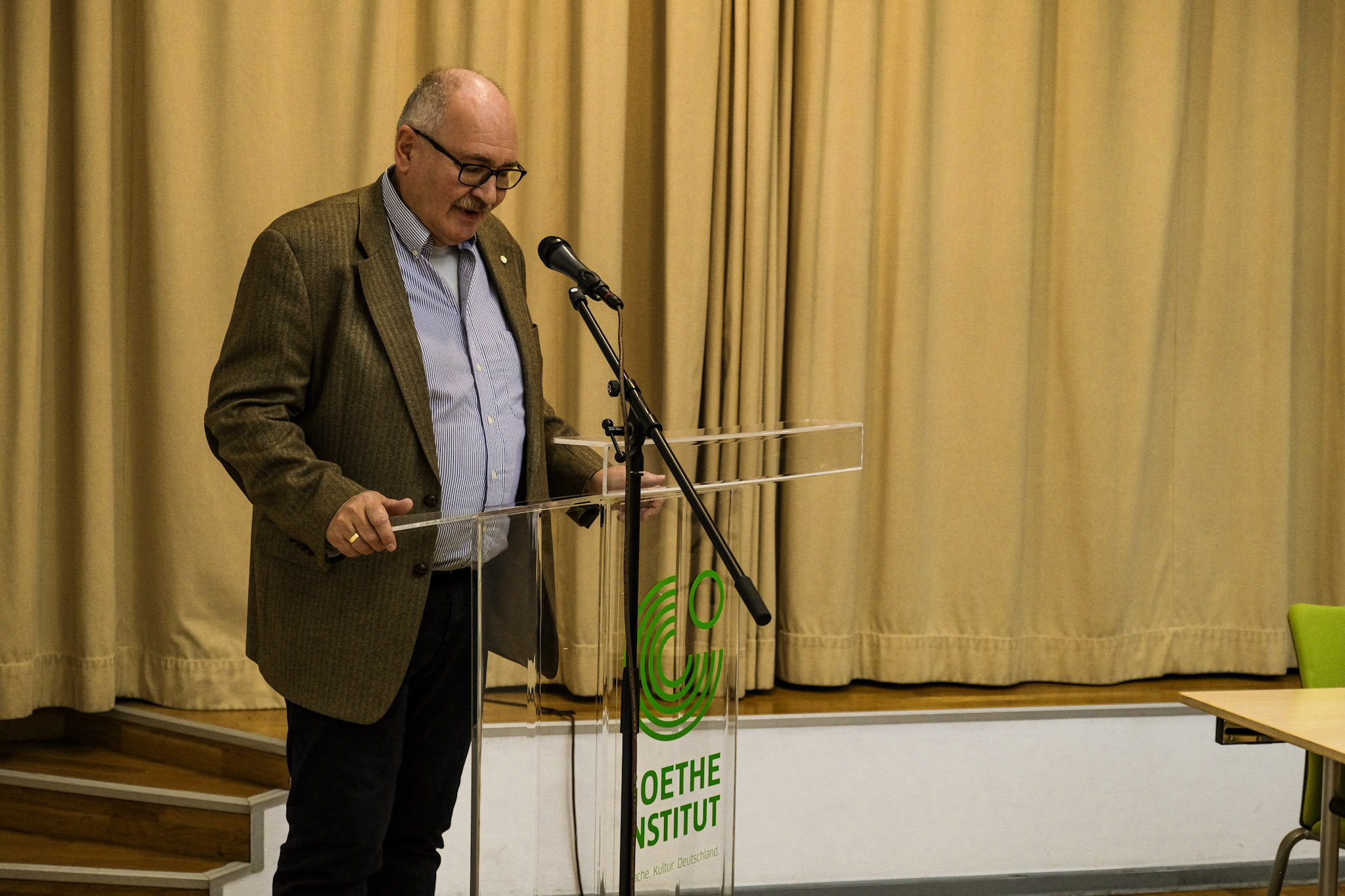
The opening remarks were delivered by Mr. Christoph Veldhues, Director of the Goethe-Institut, and H.E. Anke Konrad, Ambassador of Germany to Serbia.
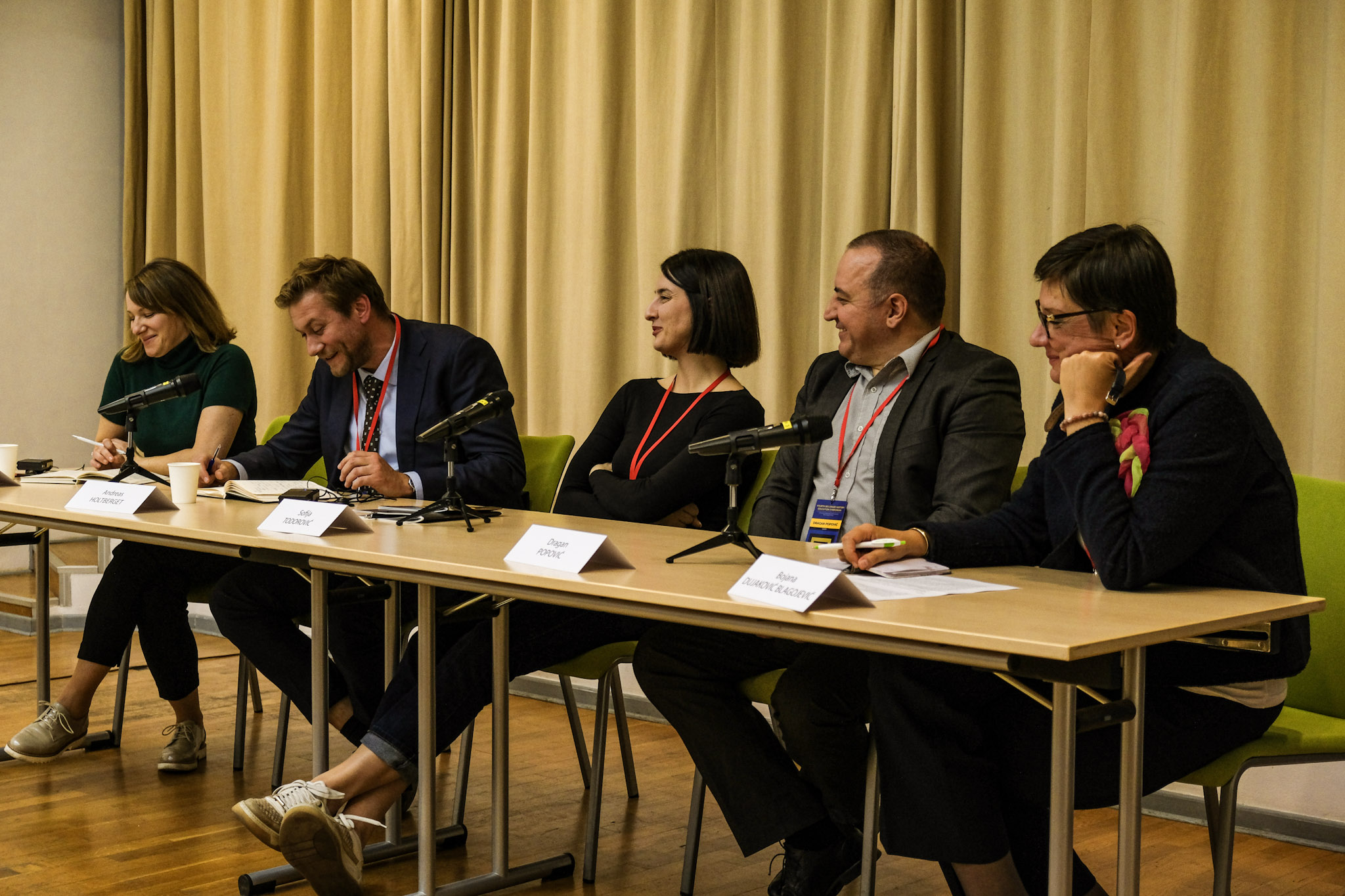
The panel was moderated by Bojana Dujković Blagojević (HIP EuroClio, Bosnia and Herzegovina).
Panelists:
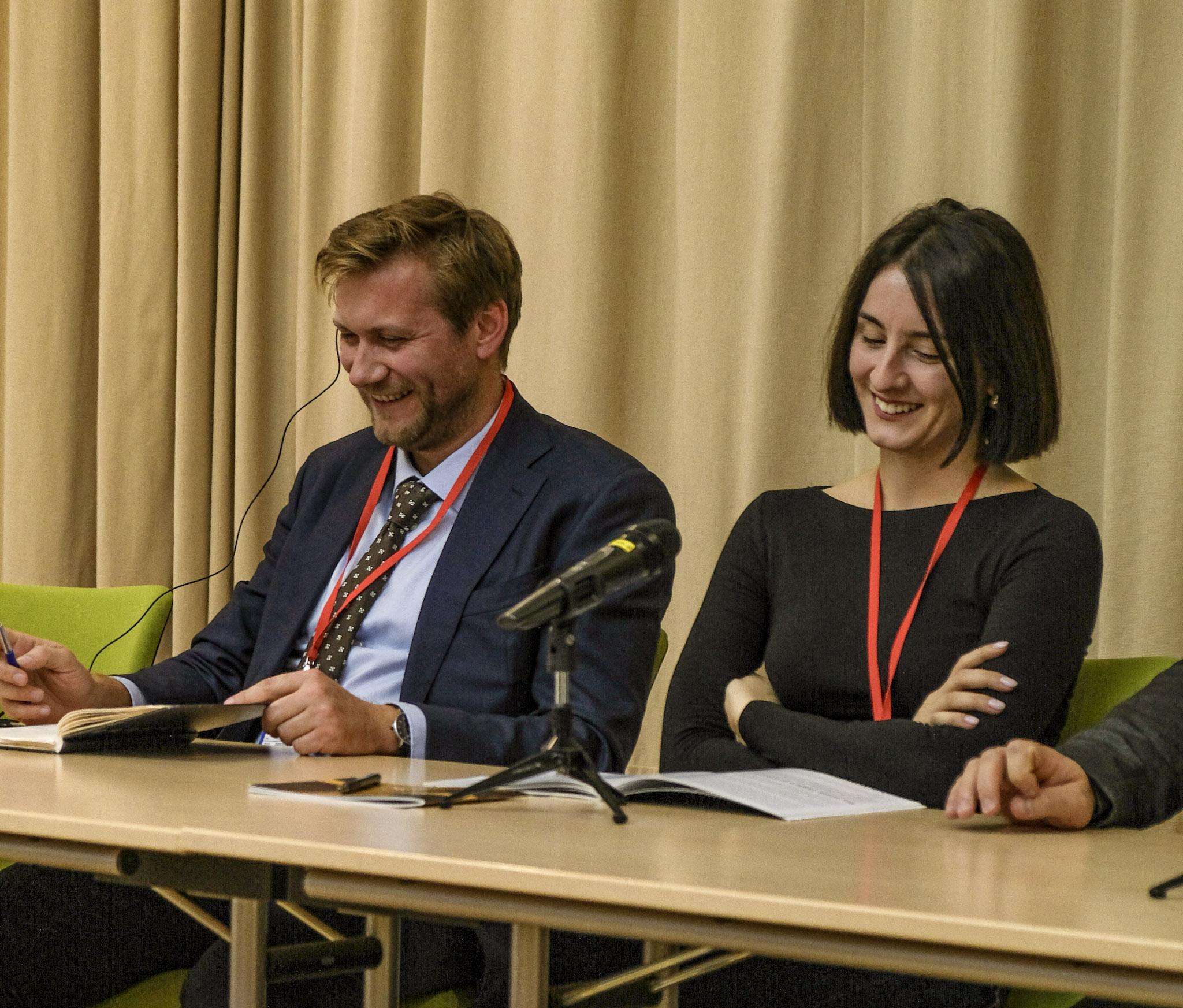
Ms. Sofija Todorović, Chair, Youth Initiative for Human Rights (YIHR), Serbia
Mr. Dragan Popović, Chair, Center for Practical Politics, Serbia
Mr. Andreas Holtberget, Project Manager, EuroClio, The Netherlands
Ms. Yuliya Kochneva, Programme Officer, Observatory on History Teaching in Europe (OHTE), Council of Europe
The panelists discussed ways to engage young people in the study of history, emphasizing the importance of interactive, critical, and digitally literate approaches. Particular attention was paid to the challenges of non-formal education in addressing sensitive topics from the recent past, such as the wars of the 1990s, the Srebrenica case, and forced migrations.
They also stressed the need to strengthen institutional support for teachers, enhance regional cooperation, and reinforce the role of civil society in fostering dialogue and reconciliation.
International experts Yuliya Kochneva from the Observatory on History Teaching in Europe (Council of Europe) and Andreas Holtberget, Project Manager at EuroClio, presented various initiatives and projects implemented at both the European and regional levels. These initiatives focus on developing a critical understanding of the past, as well as on identifying and countering disinformation, manipulation, and the misuse of history.
SECOND DAY
WORKSHOP: TEXTBOOKS AND TEACHING MATERIALS
The workshop entitled “Textbooks and Teaching Materials – In Search of a Just Peace,” moderated by Dr. Steffen Samler from the Georg Eckert Institute in Braunschweig, was dedicated to the analysis of the representation of the Versailles (1919), Yalta (1945), and Dayton (1995) peace conferences in bilateral and multilateral history textbooks. The focus was on how these key historical turning points are presented in different national curricula, as well as on the approaches used by textbook authors in contextualizing diplomatic and political processes.
The workshop was structured in two parts:
1. Introductory Presentation
The first part examined how the most important peace settlements of the twentieth century—crucial for global, European, and Balkan history—are addressed in history textbooks.
Dr. Samler presented excerpts from peace treaties and related documents, pointing to different ways historical sources are used in teaching, ranging from the 1918 speech of U.S. President Woodrow Wilson to contemporary interpretations of the Yugoslav wars of the 1990s.
Contemporary examples were also presented, such as the 2017 speech by French President Emmanuel Macron at Hartmannswillerkopf, illustrating modern approaches to the themes of peace and reconciliation.
2. Interactive Group Work
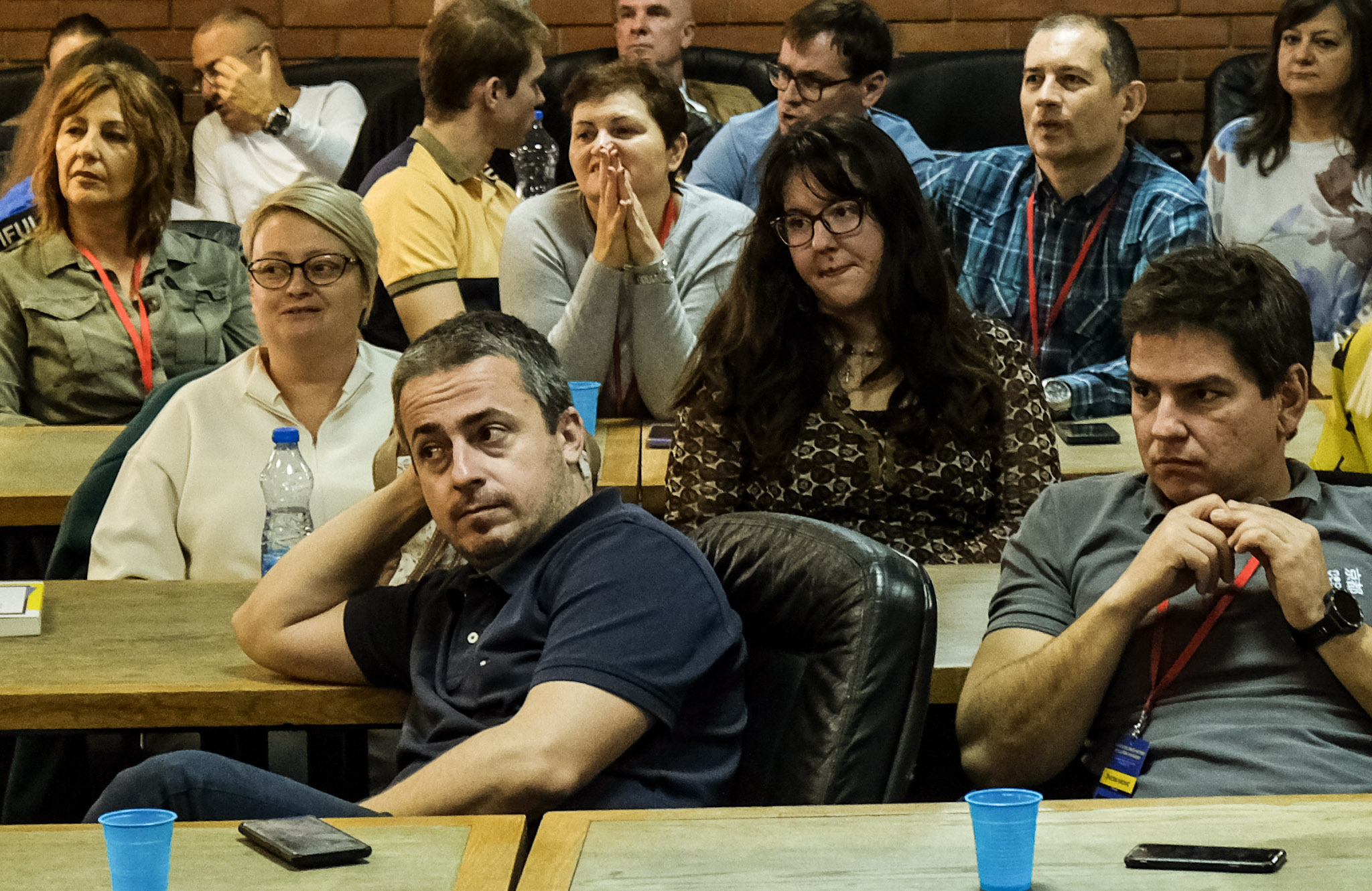
The second part of the workshop was practice-oriented and included the active participation of students, teachers, and experts.
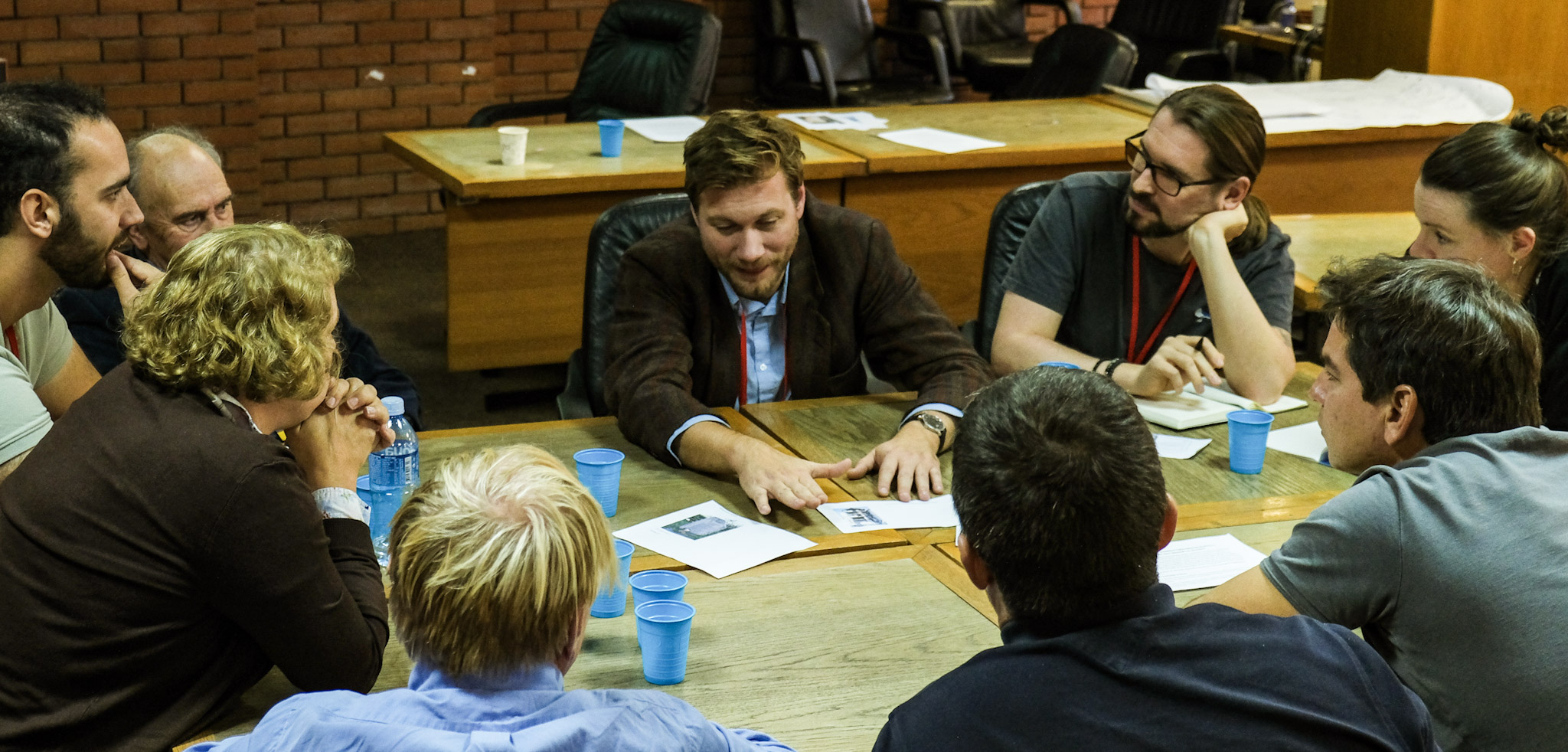
Assuming the roles of textbook authors, participants devised ways of presenting the Dayton Peace Agreement in history teaching, with the aim of promoting sustainable peace in a post-conflict society.
The groups developed different perspectives and teaching strategies, and the workshop concluded with a plenary session during which all proposals were presented, compared, and discussed.

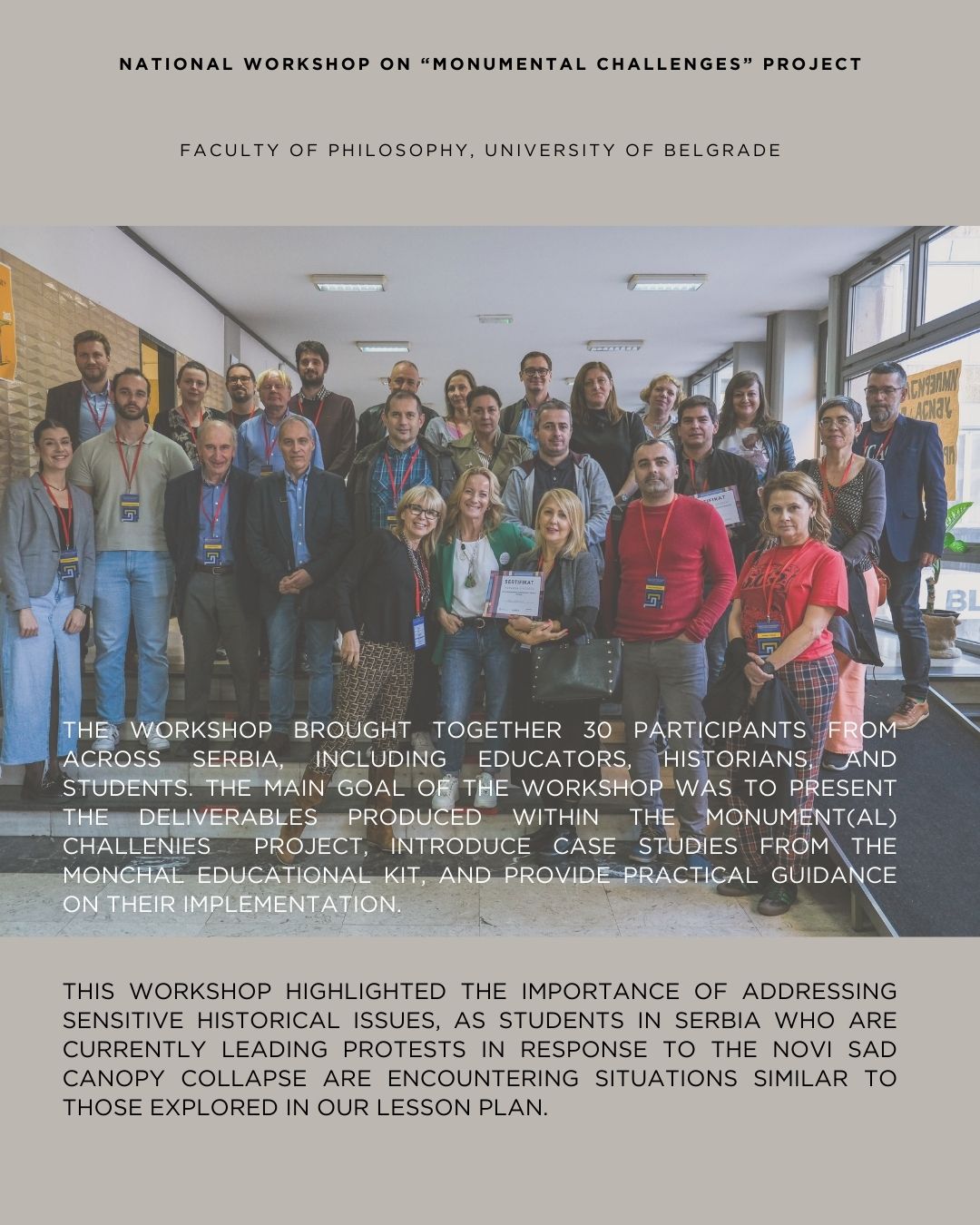
National Workshop of the “Monumental Challenges” Project
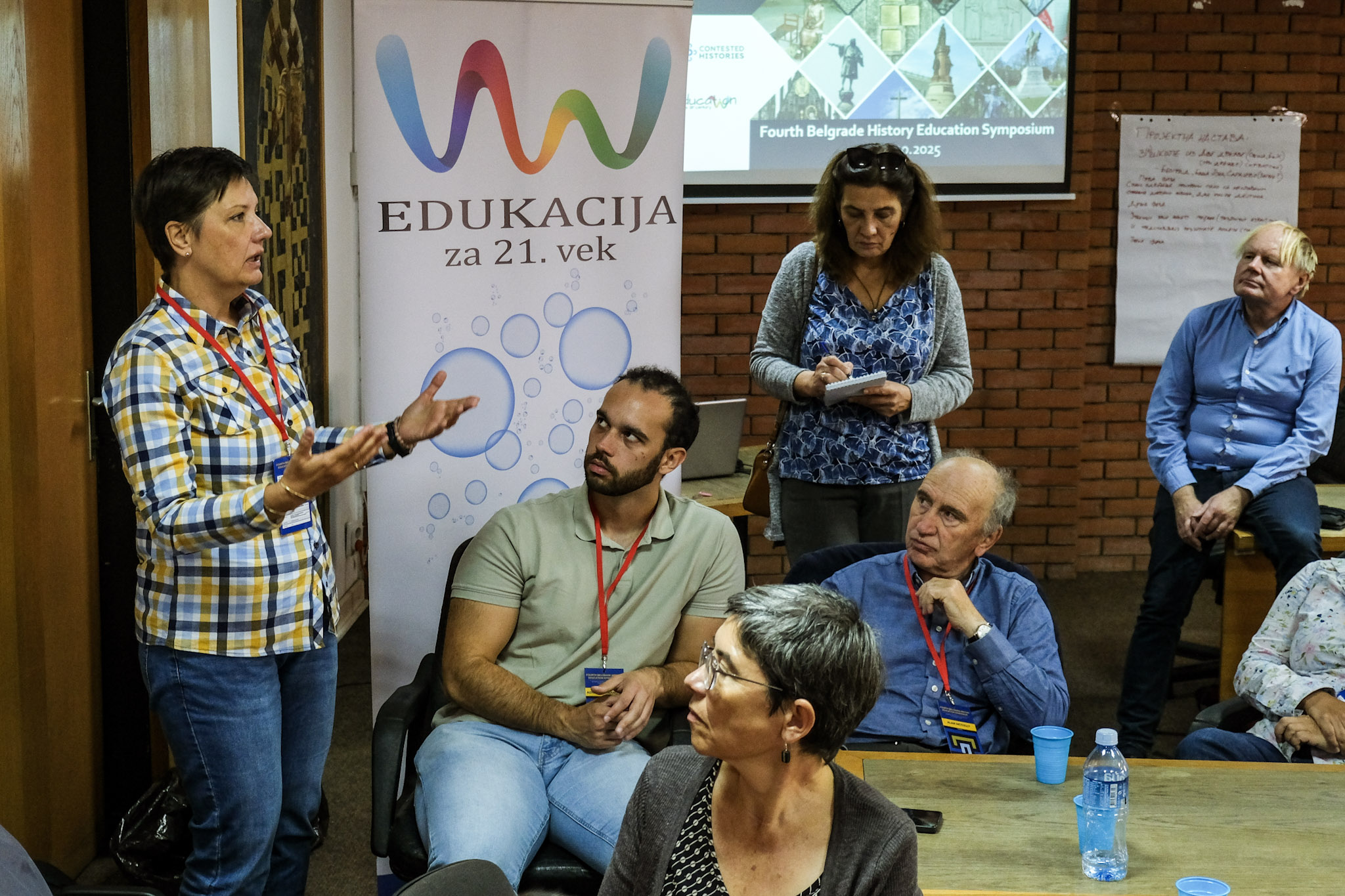
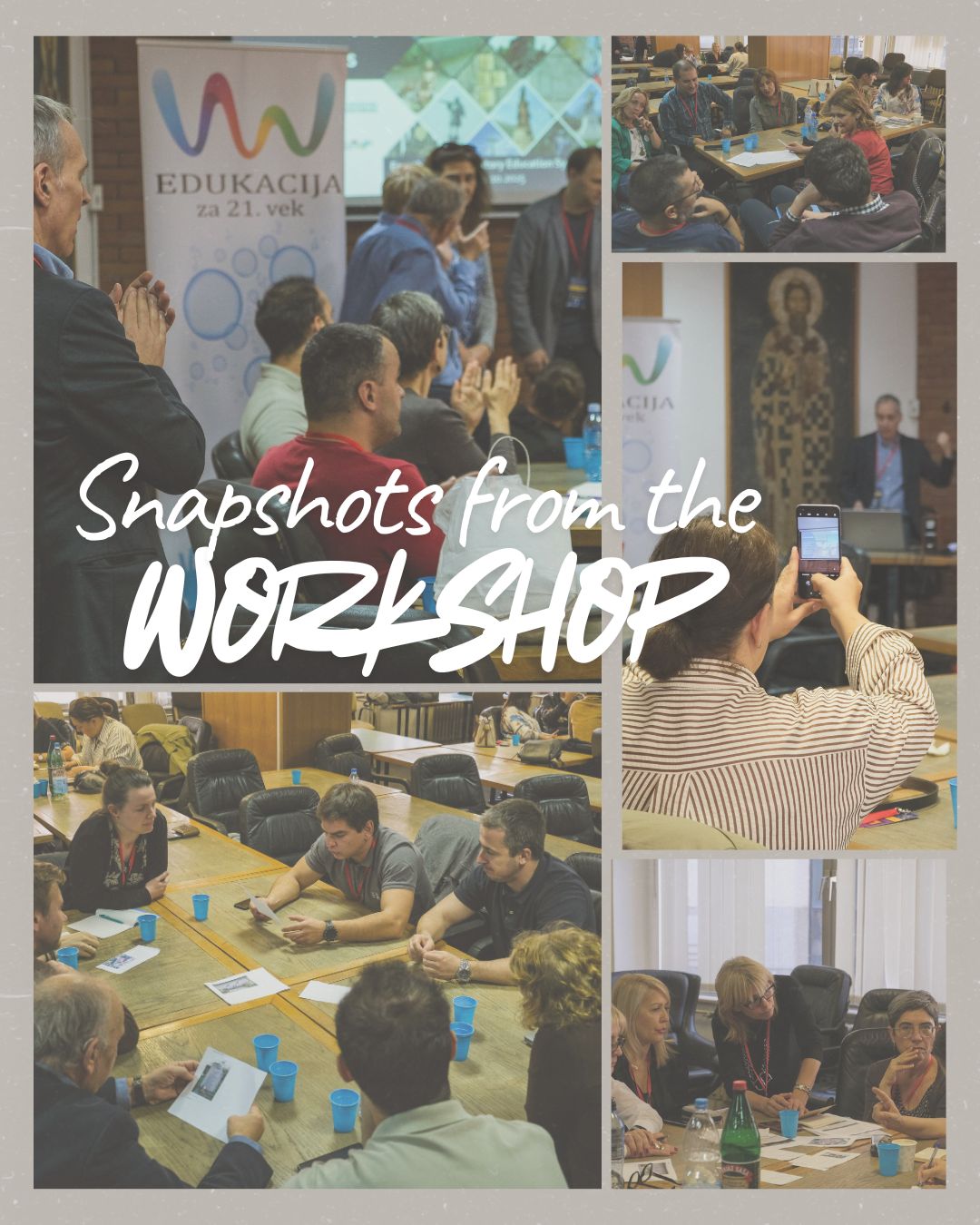
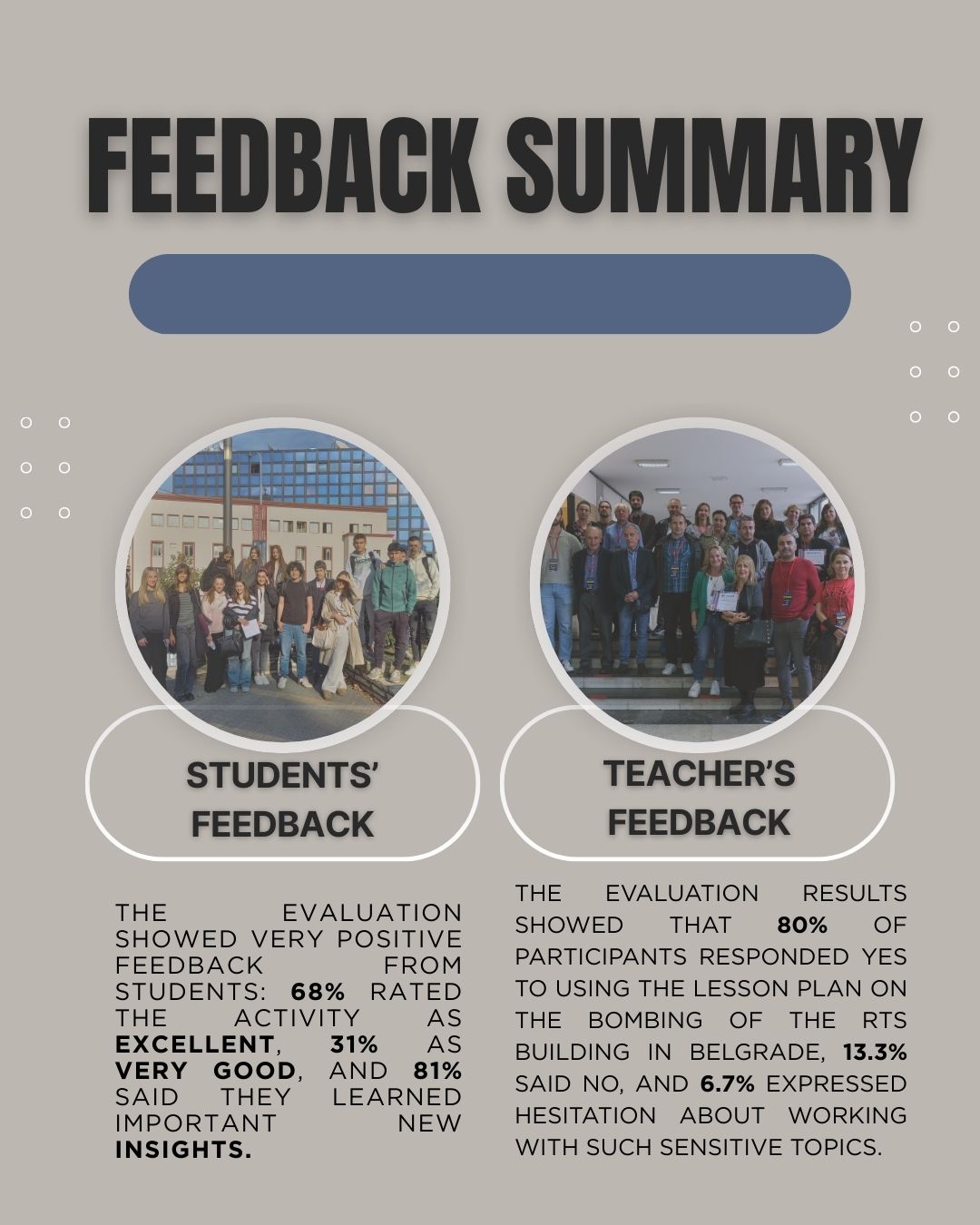
The workshop brought together 30 participants from across Serbia, including teachers, historians, and students. Its main aim was to present the results achieved within the Monument(al) Challenges project, showcase case studies from the MONCHAL educational toolkit, and provide practical guidance for their application.
The workshop highlighted the importance of engaging with sensitive historical topics, particularly as students in Serbia — currently leading protests over the collapse of a canopy in Novi Sad — encounter situations similar to those addressed in the teaching materials.
In the first part of the workshop, Professor Marko Šuica presented the conceptual and educational framework of the Monument(al) Challenges project, demonstrating how citizens and students interact with urban heritage — including monuments, street names, buildings, and memorials — which carry diverse cultural and historical meanings and can both connect and divide communities through complex identity narratives.
Emphasizing the intersection of heritage, history, and feelings of belonging or exclusion, Professor Šuica stressed that monuments serve as a starting point for conversations about contested and sensitive pasts. He posed several key questions:
- How do we remember conflicts—and how should we remember them?
- Whom or what do we commemorate, and why?
- Do we mythologize, celebrate, mourn, or critically reflect?
- Which narratives are remembered, and which are silenced?
- What messages do our monuments send to new generations?The Monument(al) Challenges
1. TheToolkit provides a comprehensive set of teaching materials, including 12 case studies with structured lesson plans, comprising:
- Lesson plans
- Basic information on each monument
- Useful existing sources on contested historical issues and monuments
- Glossary of key terms
2.The Set of Critical Classroom Incidents focuses on guiding teachers through challenging classroom situations, helping them address sensitive topics, facilitate discussions, and support students in engaging critically with contested histories.
Together, these resources equip teachers with practical tools to explore monuments meaningfully, foster critical thinking, and promote democratic competences in the classroom and during onsite learning activities.
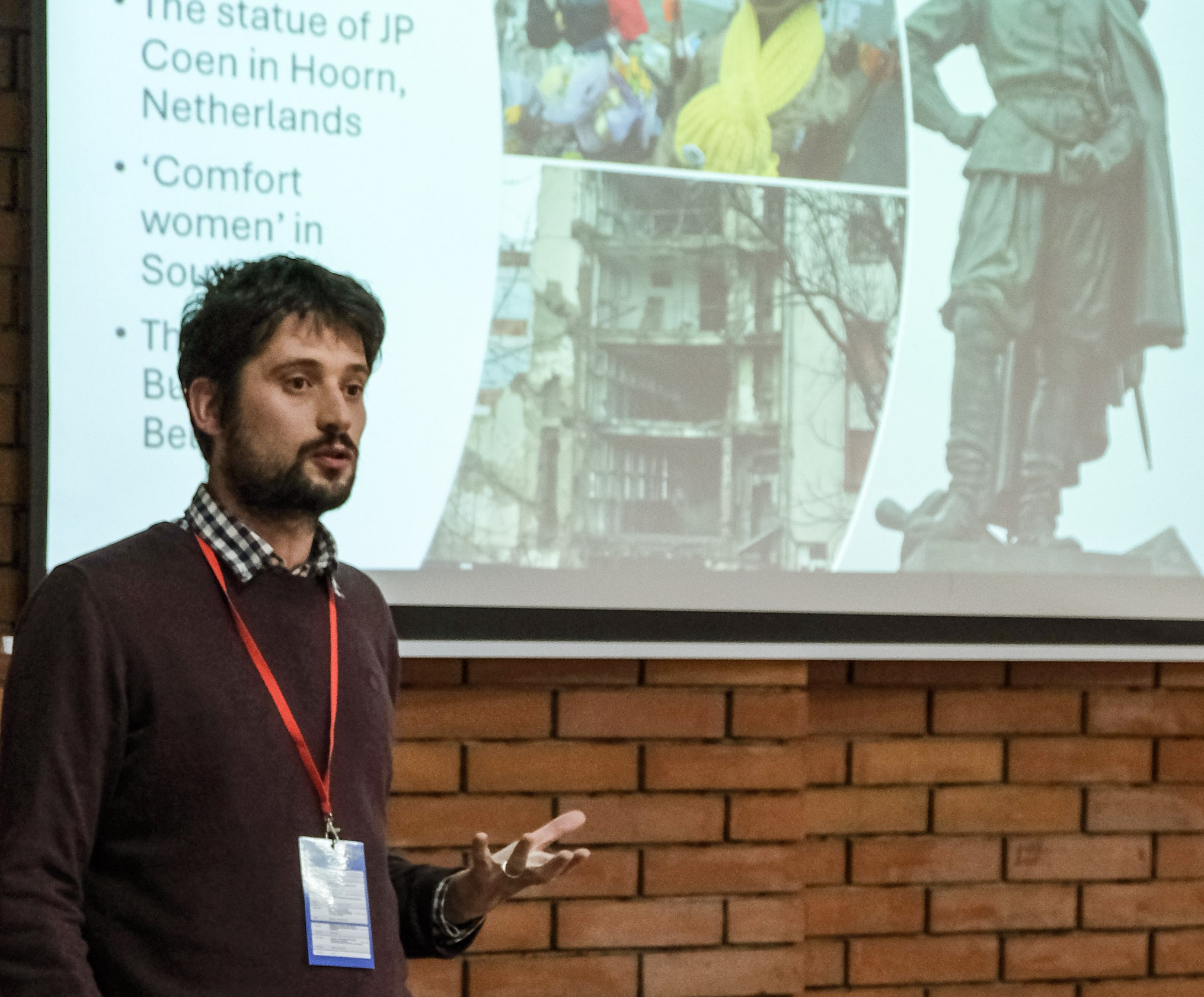
Luka Bacigalupo, researcher (UK/Serbia), presented a standalone online course based on the Monument(al) Challenges Toolkit, designed to help teachers enhance their methods through innovative didactic approaches. The course focuses on three lesson preparations, offering example activities, reflection questions, and pedagogical guidance. Teachers can complete the modules in any order.
Three lesson scenarios were presented:
-
“Comfort Women” Monument – Seoul, South Korea
-
JP Koen – Horn, Netherlands
-
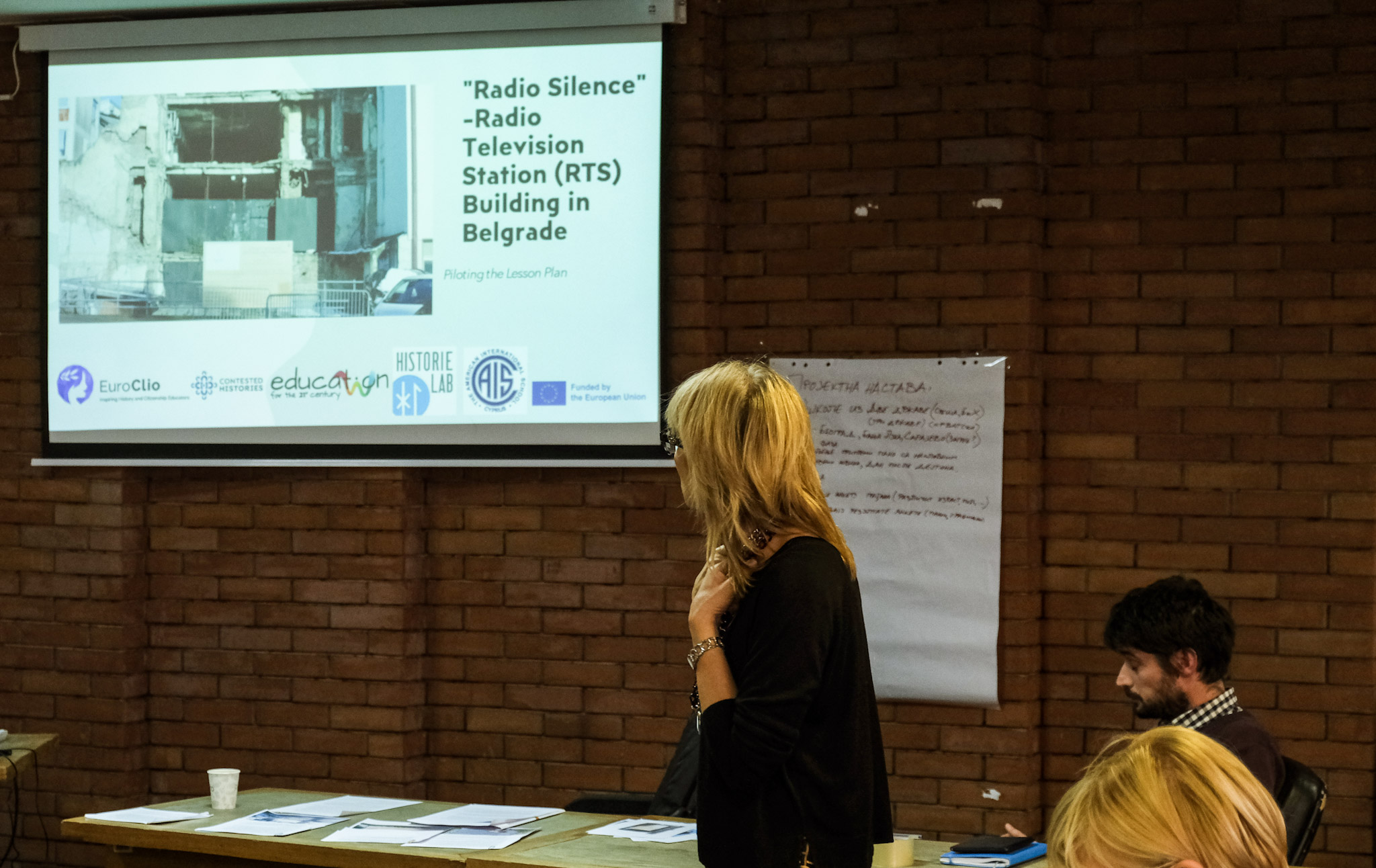
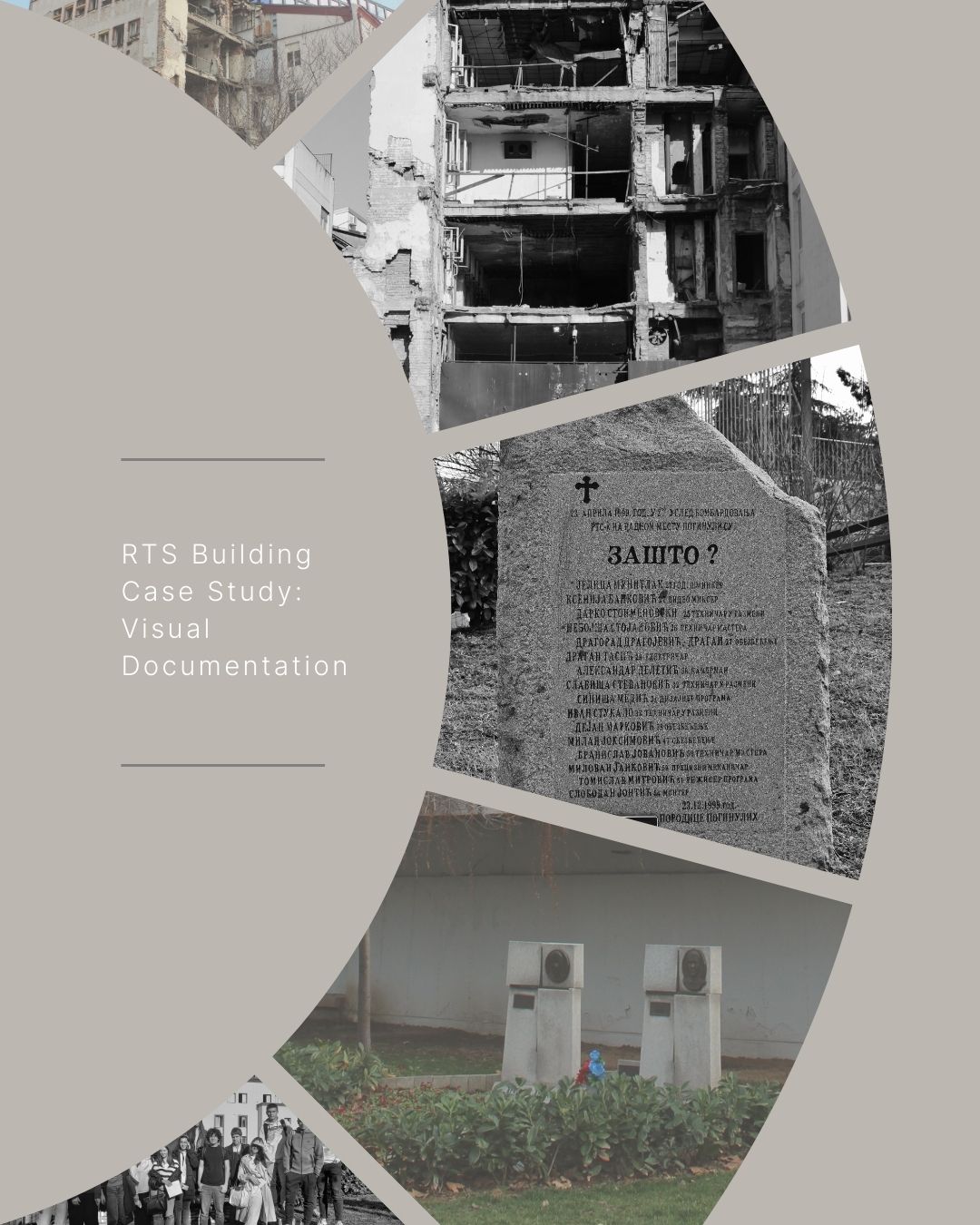
Radio-Television of Serbia (RTS) Building – Belgrade, Serbia
The modules provide detailed instructions and break down each lesson’s activities. Each begins with a recorded introduction from the author explaining the objectives and key questions. Following the structure of the Handbook, the modules include:
- Structured Lesson Plans
- Additional Sources – videos, maps, timelines, etc.
- Assessment tools
- Links for further exploration
Focusing on the intersection of heritage, history, and the sense of inclusion or exclusion, Professor Šuica emphasized that monuments serve as entry points for discussing sensitive and contested histories.Professor Šuica posed several guiding questions:
- How do we remember conflicts—and how should we remember them?
- Whom or what do we commemorate, and why?
- Do we mythologize, celebrate, mourn, or critically reflect?
- Which narratives are remembered, and which are silenced?
- What messages do our monuments send to new generations?The Monument(al) Challenges.
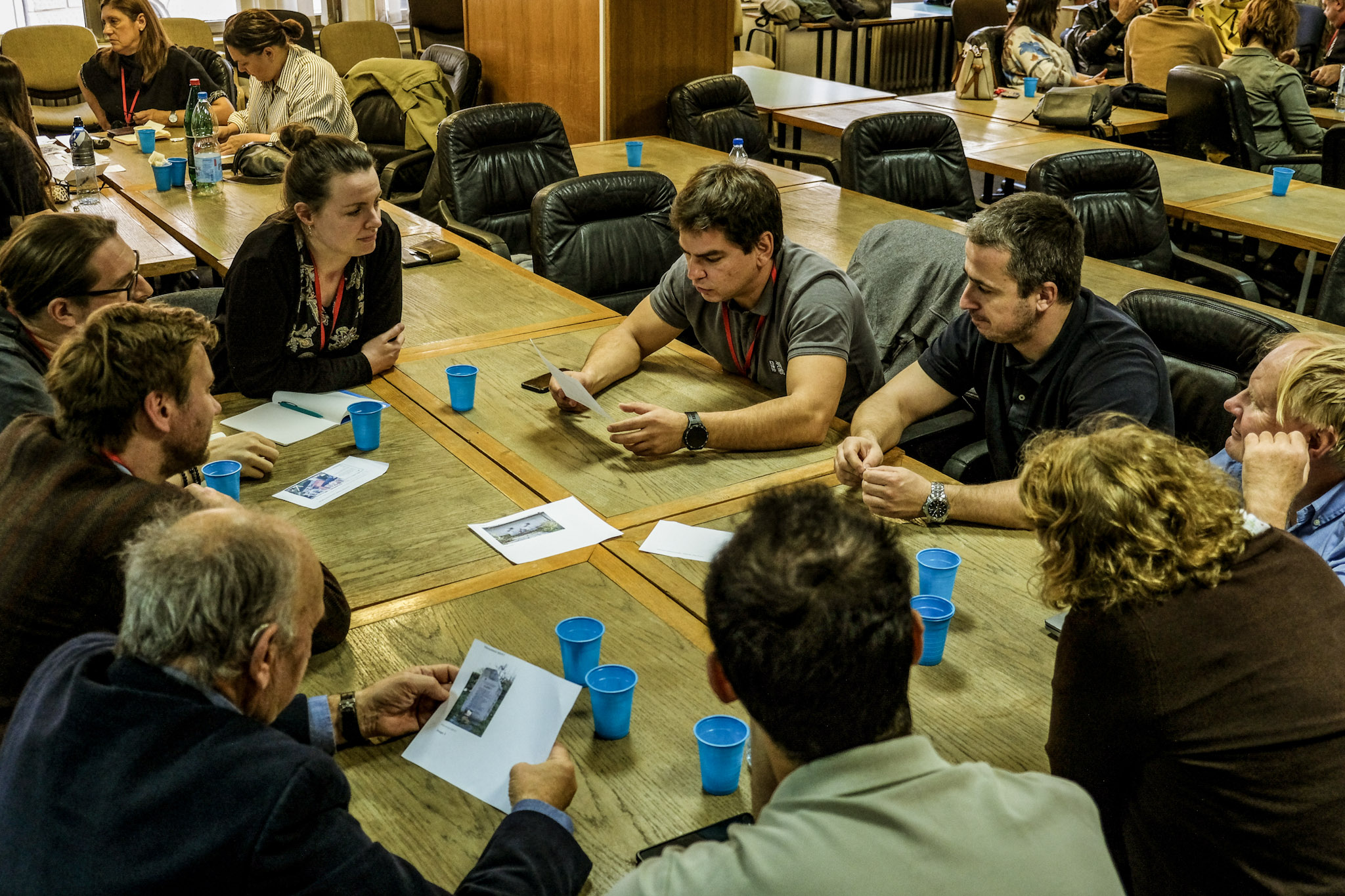
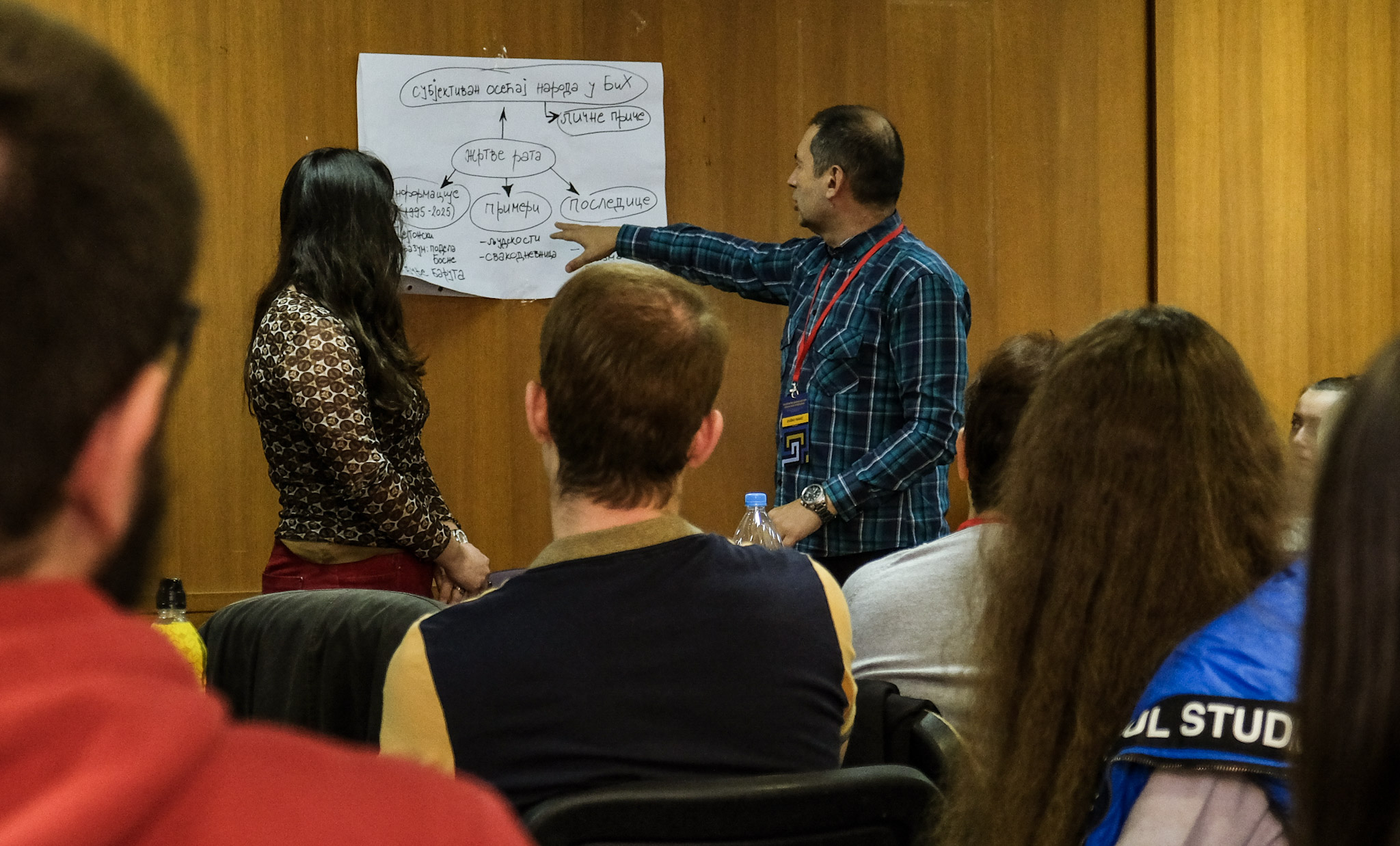
Lidija Županić Šuica presented a practical classroom activity using a role-play strategy centered on the RTS building. During the workshop, teachers took part in the role-play, experiencing firsthand how a lesson plan based on the RTS building case study can be applied in practice, effectively demonstrating the use of a place-based approach in history teaching.
Participants were assigned roles, along with supporting materials and site photographs, representing perspectives such as:
- Families of the victims
- State officials
- Officials from NATO countries
- Tourists
The activity was particularly sensitive, as it coincided with the scheduled commemoration of the 16 victims of the Novi Sad canopy collapse the following day (1 November). The cases of the canopy and the RTS building revealed notable parallels: in both incidents, 16 people lost their lives, and in neither case had the state initiated a joint commemoration or acted promptly to assign responsibility.
This analogy underscored the relevance and significance of the lesson plan, demonstrating how such activities can engage students with contemporary social and historical issues while simultaneously fostering empathy, critical thinking, and promoting civic participation and activism.